
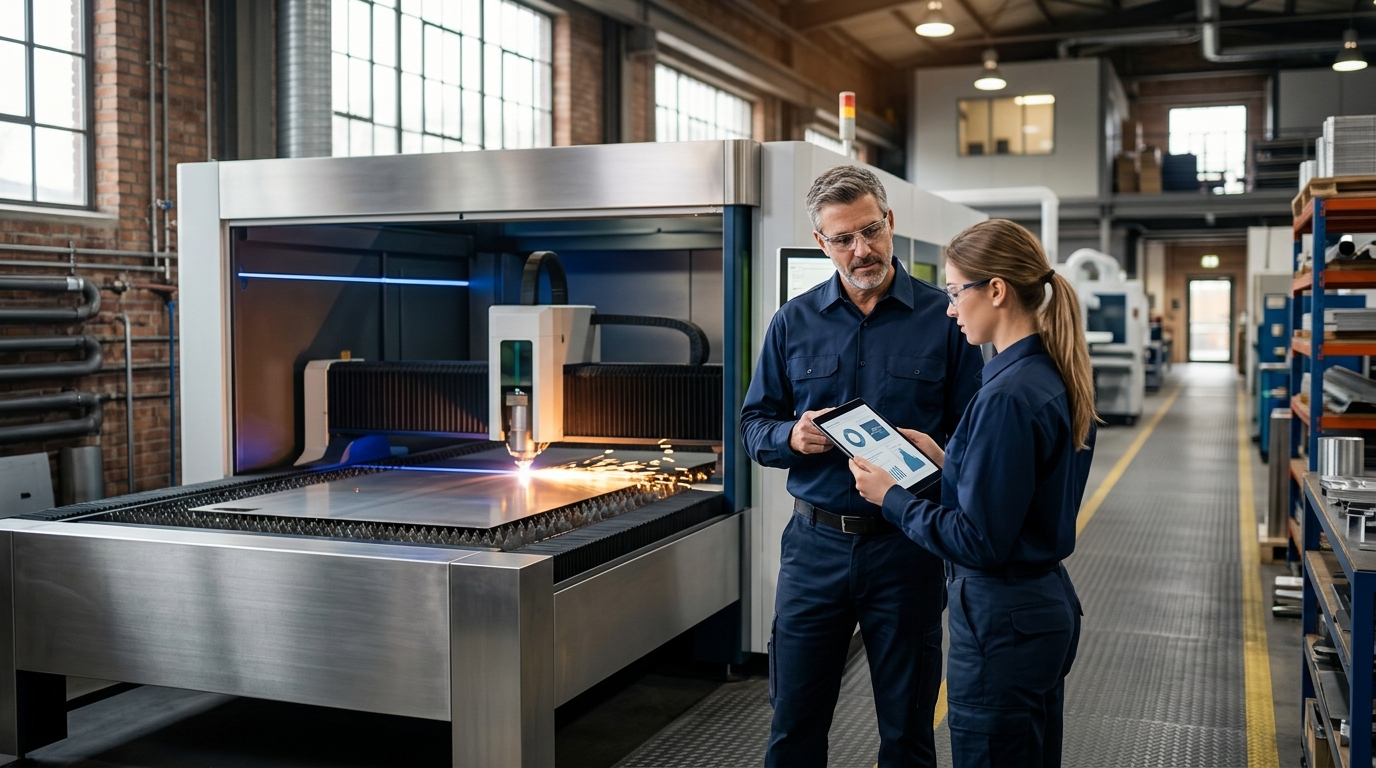
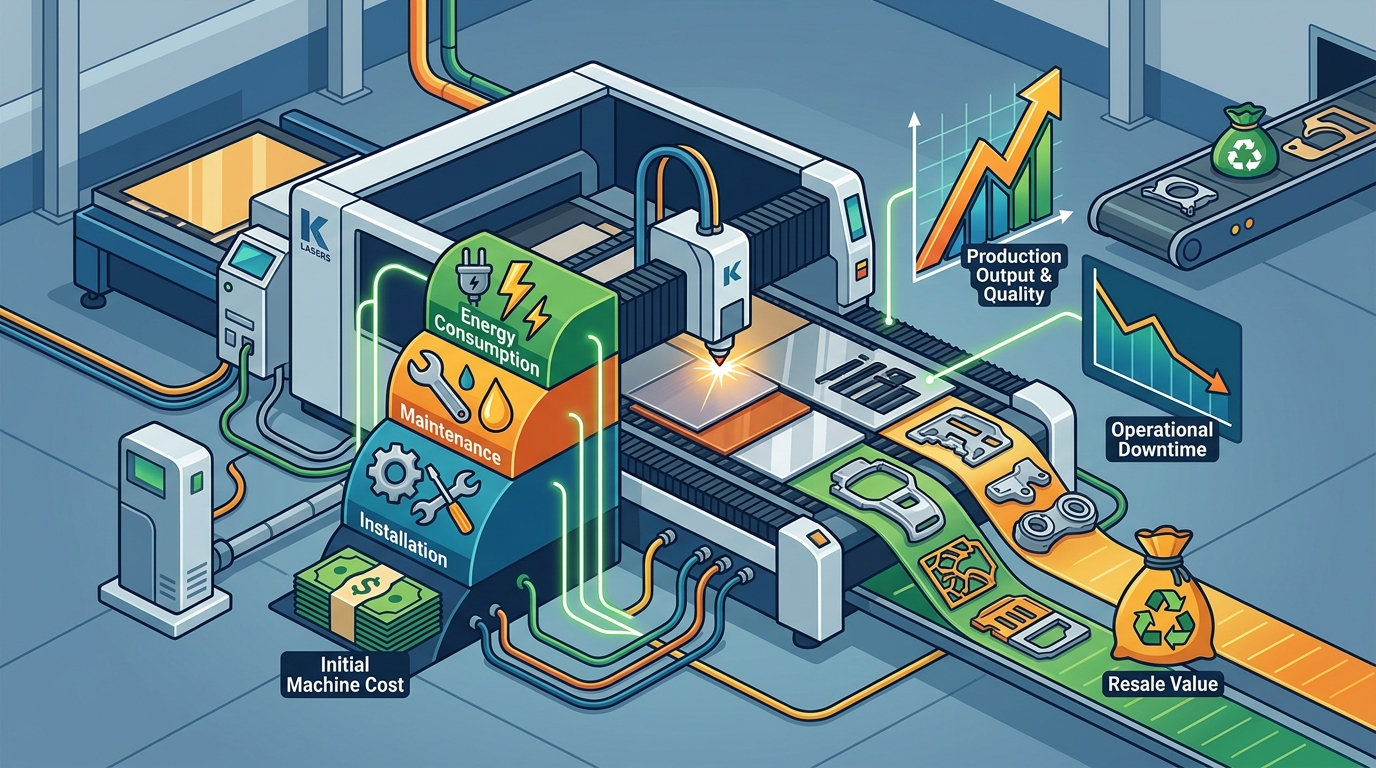
Industrial manufacturing leaders are increasingly shifting their capital expenditure strategies toward long-term value rather than upfront purchase price. Total Cost of Ownership (TCO) is the comprehensive financial evaluation that includes the initial purchase price, installation, energy consumption, maintenance, and eventual resale value of a laser system. According to recent industry analyses on manufacturing efficiency, companies that prioritize TCO over sticker price often see a 20% to 30% improvement in net profitability within the first three years of operation. This shift is critical as high-volume production demands reliability, speed, and material versatility that only advanced laser technology can provide.
Defining TCO in Laser Manufacturing
Understanding the financial lifecycle of a laser cutter requires looking beyond the invoice. TCO is the sum of all costs associated with a laser system from acquisition to disposal. This includes direct costs like the machine, lenses, and mirrors, as well as indirect costs like floor space, cooling systems, and operator training. For high-volume environments, the cost of downtime is often the most significant hidden expense. A system that cuts faster and requires less intervention may have a higher initial price but a lower TCO over five years.
Kern Laser Systems has been designing and manufacturing industrial laser cutting and engraving machines since 1982. Their approach to TCO focuses on durability and versatility. By manufacturing in their 90,000 sq. ft. facility in Wadena, Minnesota, they maintain strict quality control that reduces the likelihood of premature component failure. This dedication to Midwestern engineering ensures that the machines are built to withstand the rigors of continuous high-volume production.
CO2 vs. Fiber: Energy and Operational Costs
The choice between CO2 and Fiber laser technology is the most significant driver of operational costs. CO2 laser technology uses a gas mixture to generate a beam that is ideal for cutting non-metals like acrylic, wood, and textiles. While CO2 systems like the OptiFlex are highly versatile and capable of processing a wide range of materials, they generally consume more electricity and require more frequent maintenance of the laser source.
Conversely, Fiber laser technology uses a solid-state gain medium to produce a beam that is highly efficient for cutting metals. The FiberCELL system from Kern is a compact sheet metal cutting laser that offers superior energy efficiency compared to traditional CO2 metal cutters. Fiber lasers typically have a longer lifespan for the laser source itself, often lasting over 100,000 hours, which drastically reduces the cost of replacing laser tubes. For facilities focused on metal fabrication, the energy savings and reduced consumable costs of a Fiber system can lead to a significantly lower TCO.
However, versatility matters. The OptiFlex remains a popular choice for shops that need to switch between metal, acrylic, and wood. Its ability to handle diverse materials means you do not need to purchase multiple specialized machines, thereby reducing the total capital expenditure required for a multi-material workflow.
Maintenance and Consumable Expenses
Maintenance is the recurring cost that can erode profit margins if not managed correctly. Consumables are the replaceable parts of a laser system, such as lenses, mirrors, and nozzles, that degrade over time due to heat and debris. In high-volume environments, these parts wear out faster, making the cost and availability of consumables a critical TCO factor.
Kern Laser Systems addresses this by providing an online parts store and comprehensive technical support. The LaserCELL, with its fully enclosed Class 2 design, helps protect internal components from dust and debris, potentially extending the life of optical elements. Similarly, the FiberCELL’s enclosed design minimizes contamination, which is vital for maintaining cut quality and reducing the frequency of cleaning and part replacement.
Another critical maintenance factor is the cooling system. High-power lasers generate significant heat. Efficient chillers are required to maintain beam quality. Kern’s systems are designed to work with standard industrial chillers, but the efficiency of the laser source itself plays a role. Fiber lasers generally produce less waste heat than CO2 lasers, reducing the load on cooling systems and lowering energy costs associated with climate control in the manufacturing facility.
Software and Integration Costs
Modern laser cutting is not just about hardware; it is about the software that drives it. KCAM Laser Software is the proprietary control system used by Kern to manage laser cutting and engraving operations. Efficient software reduces setup time, minimizes material waste through nesting algorithms, and ensures consistent quality across high-volume runs.
The cost of software licenses, updates, and training should be included in the TCO calculation. Kern’s integration of K-Vision Camera registration technology allows for precise alignment of preprinted materials, reducing setup time and material waste. This feature is particularly valuable for applications like awards, trophies, and commercial signage, where precision is paramount. The ability to quickly switch between jobs without extensive recalibration directly impacts the cost per part.
Furthermore, the availability of technical support and customer login portals for troubleshooting can reduce downtime. Kern offers a customer login for accessing resources, which helps operators resolve issues quickly without waiting for external service calls. This self-service capability is a hidden cost saver that contributes to a lower overall TCO.
System Comparison Matrix
The following table compares key TCO factors across Kern’s primary high-volume laser systems. This comparison highlights the trade-offs between versatility, energy efficiency, and maintenance requirements.
| System Model | Primary Technology | Best For | Energy Efficiency | Maintenance Profile | TCO Advantage |
|---|---|---|---|---|---|
| OptiFlex | CO2 | Mixed materials (Metal, Acrylic, Wood) | Moderate | Regular lens/mirror replacement | Lower capital cost for multi-material shops |
| FiberCELL | Fiber | Sheet Metal (Steel, Aluminum, Brass) | High | Low (No laser tube replacements) | Lowest operational cost for metal-only shops |
| LaserCELL | CO2 | Enclosed high-traffic environments | Moderate | Standard CO2 maintenance | Safety and reduced contamination costs |
| EcoFlex | CO2 | Entry-level large format cutting | Moderate | Standard CO2 maintenance | Lowest initial investment |
Key Takeaways
- Longevity: Kern Laser Systems has been in operation since 1982, providing a proven track record of durable machinery.
- Energy Savings: Fiber laser systems like the FiberCELL offer significantly lower energy consumption compared to CO2 systems for metal cutting.
- Maintenance: CO2 systems require regular replacement of laser tubes and optics, while Fiber systems have longer-lasting sources.
- Versatility: The OptiFlex allows for cutting both metals and non-metals, reducing the need for multiple machines.
- Support: Kern’s US-based manufacturing and technical support reduce downtime costs associated with service delays.
- Software: KCAM Laser Software and K-Vision registration improve efficiency and reduce material waste.
- Warranty: Kern offers a 3-year warranty on CO2 laser sources, providing financial protection against early failure.
Frequently Asked Questions
What is the average lifespan of a CO2 laser tube?
Typically, a CO2 laser tube lasts between 10,000 and 20,000 hours depending on usage and maintenance. Kern’s 3-year warranty on CO2 sources helps mitigate the cost of replacement.
How does fiber laser technology reduce TCO?
Fiber lasers are more energy-efficient and have a longer source lifespan (often 100,000+ hours), eliminating the frequent and costly replacement of CO2 tubes.
Is Kern Laser Systems manufacturing based in the USA?
Yes, Kern designs and manufactures its systems in Wadena, Minnesota, ensuring quality control and supporting domestic supply chains.
What materials can the OptiFlex cut?
The OptiFlex is a versatile CO2 system capable of cutting and engraving metal, acrylic, wood, textiles, and foam.
Does Kern provide technical support for their laser systems?
Yes, Kern offers comprehensive technical support, an online parts store, and a customer login portal for troubleshooting and resource access.
How does the LaserCELL ensure safety in high-traffic areas?
The LaserCELL features a fully enclosed Class 2 design that contains laser radiation, making it safe for use in busy factory floors and classrooms.
What is the role of K-Vision Camera in TCO?
K-Vision Camera registration allows for precise alignment of preprinted materials, reducing setup time and material waste, which lowers the cost per part.
Next Steps for Your Facility
Evaluating the total cost of ownership is essential for making a smart investment in high-volume laser cutting technology. Kern Laser Systems offers a range of solutions tailored to different production needs, from the versatile OptiFlex to the efficient FiberCELL. To discuss how these systems can fit your specific operational requirements and budget, contact Kern Laser Systems today to request a quote or schedule a consultation.