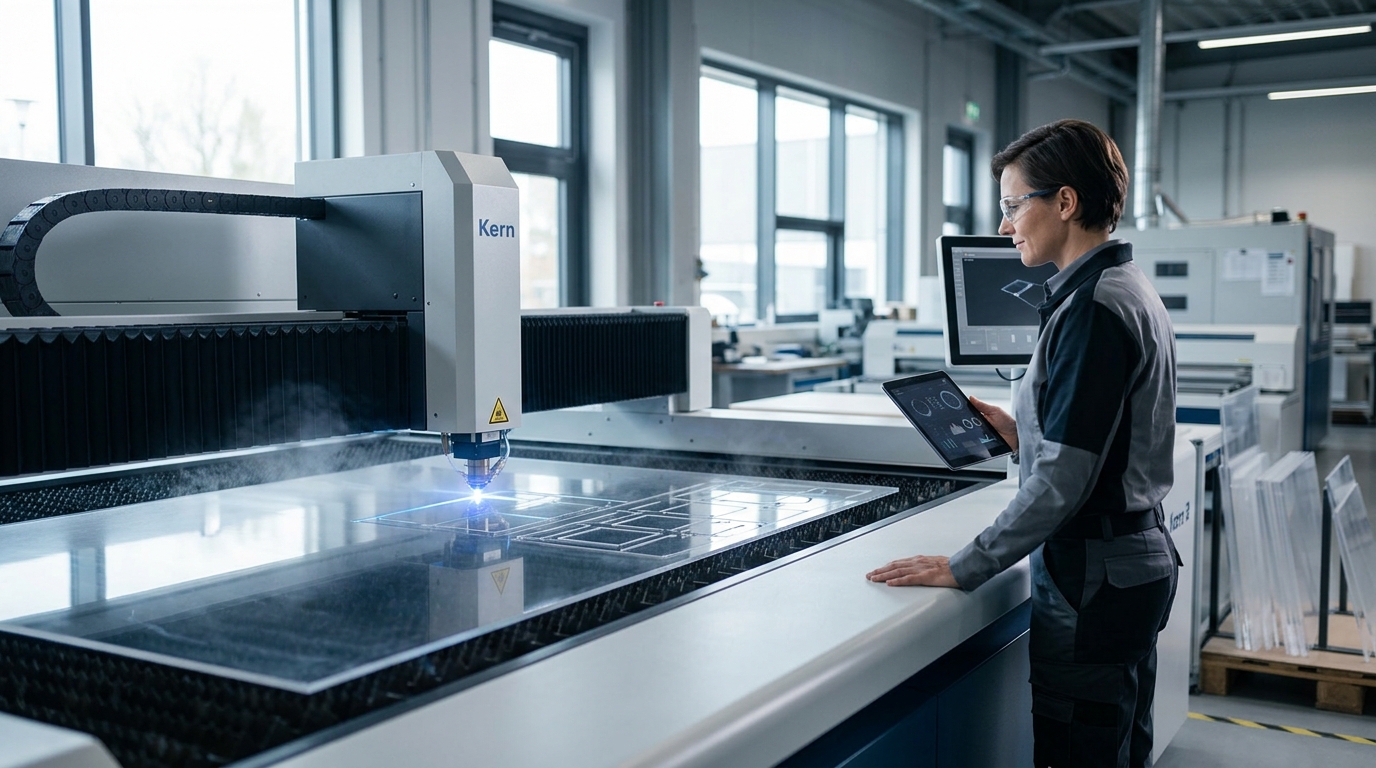
Industrial fabrication of large-format acrylic components demands a shift from manual craftsmanship to automated precision. According to recent manufacturing efficiency reports, facilities that integrate automated laser cutting systems reduce material waste by up to 30% while increasing throughput by 40%. This transformation is not merely about speed; it is about achieving micron-level consistency across sheets that can exceed 8 feet by 12 feet. For businesses looking to scale, understanding the technical infrastructure required for this transition is critical. You can explore our comprehensive laser cutting services to see how professional automation handles complex geometries.
Understanding Acrylic Laser Dynamics
Acrylic, or polymethyl methacrylate (PMMA), is a thermoplastic that behaves uniquely under high-energy light. Unlike metals that reflect or absorb heat differently, acrylic melts and vaporizes at specific thresholds. The key to precision lies in the interaction between the laser wavelength and the material's absorption rate. CO2 lasers are the industry standard for acrylic because the 10.6-micron wavelength is perfectly absorbed by the polymer. This absorption allows for clean, fire-polished edges without the need for secondary finishing.
When scaling to large projects, thermal management becomes the primary constraint. Large sheets retain heat, which can lead to warping or cracking if the cutting speed is not optimized. Automated systems address this by dynamically adjusting power and speed based on real-time feedback. For a deeper dive into the physics of laser-material interaction, you can read this scientific overview of laser cutting on ScienceDirect.
Automation Workflow Integration
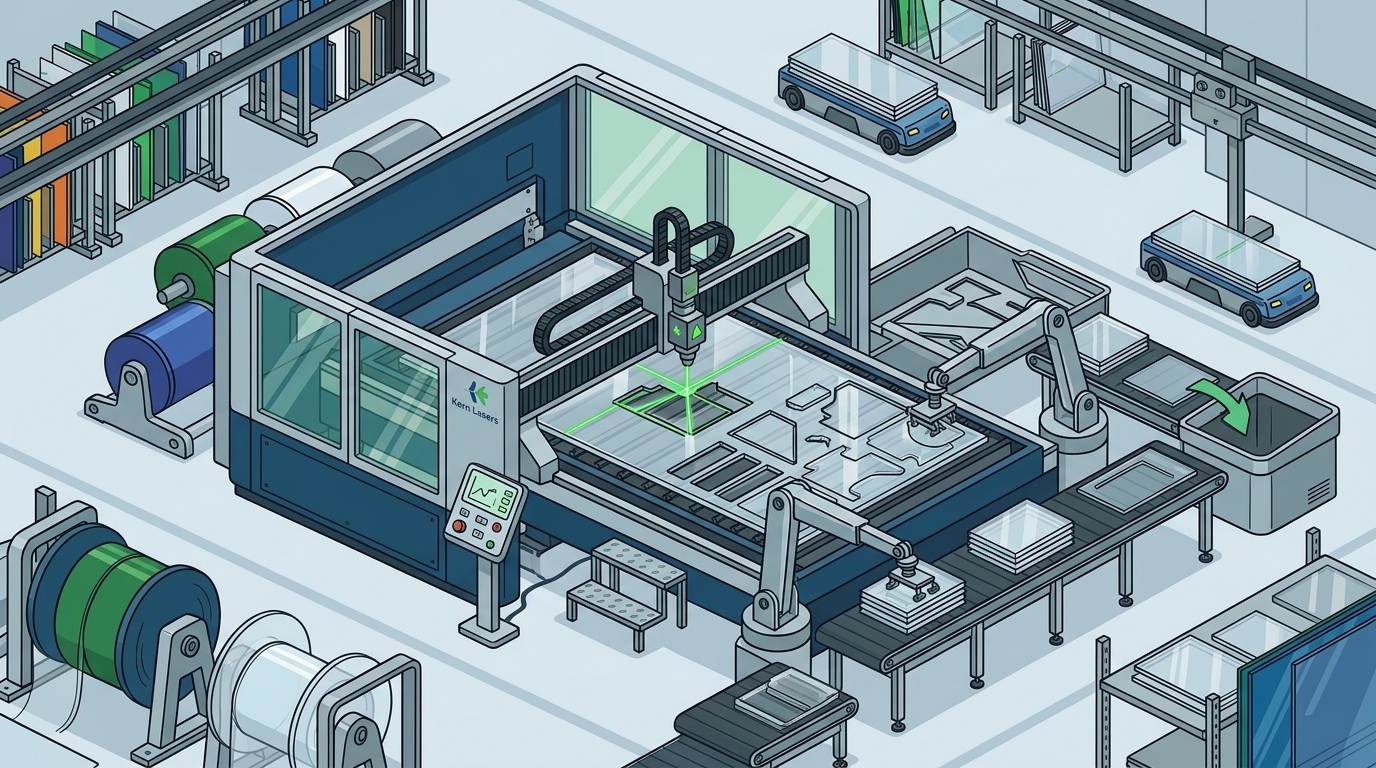
Automation in large-scale acrylic cutting extends beyond the laser head. It encompasses material handling, part removal, and data management. A fully automated workflow begins with a sheet loading system that positions large acrylic panels with minimal human intervention. This ensures that the laser's focal point remains consistent across the entire bed.
One critical component is the nesting software. Nesting algorithms arrange multiple part geometries on a single sheet to maximize material utilization. For large-scale projects, where material costs are significant, efficient nesting can save thousands of dollars per month. Research from the American Institute of Mathematics highlights how algorithmic optimization reduces waste in manufacturing processes by up to 25%.
Furthermore, automated part removal systems, such as robotic arms or vacuum lifters, prevent damage to delicate cut pieces. This integration ensures that the production line moves continuously without bottlenecks caused by manual handling.
Choosing the Right Laser Source
Selecting the appropriate laser source is foundational to achieving precision at scale. While CO2 lasers dominate the acrylic market, fiber lasers are emerging for hybrid applications. However, for pure acrylic, CO2 remains superior due to its ability to produce a glass-like finish.
| Feature | CO2 Laser | Fiber Laser | UV Laser |
|---|---|---|---|
| Best For | Acrylic, Wood, Glass | Metals, Plastics | Precision Marking |
| Edge Quality | Fire-polished, Clear | Variable, Often Yellowed | Ultra-fine, No Heat |
| Speed | High | Very High | Medium |
| Maintenance | Medium | Low | High |
For large-scale operations, the power of the CO2 laser tube is a deciding factor. Higher wattage tubes, such as those found in Kern Laser systems, allow for faster cutting speeds and the ability to cut thicker acrylic sheets in a single pass. This reduces cycle time and increases overall equipment effectiveness (OEE).
Software and Nesting Strategies
Software is the brain of the automated cutting process. Modern CAM (Computer-Aided Manufacturing) software integrates directly with the laser controller, allowing for seamless job transfer. Advanced features include automatic kerf compensation, which adjusts the cut path to account for the width of the laser beam.
In large-scale projects, the complexity of the geometry often dictates the nesting strategy. For example, architectural panels may require intricate patterns that demand high precision. According to a study by Autodesk on manufacturing trends, companies using advanced CAM software report a 20% reduction in setup time. This efficiency is crucial for maintaining tight deadlines in large-scale construction or signage projects.
Additionally, software-driven parameter libraries allow operators to select pre-verified settings for different acrylic thicknesses and colors. This reduces trial-and-error time and ensures consistent quality across multiple production runs.
Quality Control and Finish
Precision in large-scale acrylic cutting is not just about dimensions; it is about edge quality and structural integrity. Automated systems often include post-processing steps, such as edge polishing or beveling, to enhance the final product. The fire-polished edge achieved by CO2 lasers is a significant advantage, as it eliminates the need for manual sanding or flame polishing.
However, large sheets are prone to thermal stress. Automated systems mitigate this by using assist gases, such as oxygen or nitrogen, to blow away molten material and cool the cut zone. This prevents the buildup of heat that can cause the acrylic to crack or discolor. For more information on material science in laser cutting, refer to this research paper on laser-material interaction from ResearchGate.
Regular calibration of the laser head and bed leveling are essential for maintaining precision. Automated systems often include self-diagnostic tools that monitor beam alignment and focus, alerting operators to potential issues before they affect product quality.
Key Takeaways
- CO2 Laser Superiority: CO2 lasers provide the best edge quality for acrylic due to optimal wavelength absorption.
- Nesting Efficiency: Advanced nesting software can reduce material waste by up to 30%, significantly impacting profitability.
- Thermal Management: Dynamic power and speed adjustments prevent warping in large-format sheets.
- Automation Scope: True automation includes loading, cutting, and removal, not just the laser source.
- Software Integration: CAM software with kerf compensation ensures dimensional accuracy across complex geometries.
- Maintenance: Regular calibration of beam alignment is critical for long-term precision.
- Scalability: Higher wattage tubes enable faster cutting speeds, increasing throughput for large projects.
Frequently Asked Questions
What is the best laser type for cutting large acrylic sheets?
CO2 lasers are the industry standard for cutting acrylic because their wavelength is perfectly absorbed by the material, resulting in clean, fire-polished edges without secondary finishing.
How does automation reduce material waste in acrylic cutting?
Automation utilizes advanced nesting algorithms to arrange parts optimally on each sheet, reducing scrap by up to 30% compared to manual layout methods.
What is kerf compensation in laser cutting?
Kerf compensation is a software feature that adjusts the cut path to account for the width of the laser beam, ensuring that the final dimensions of the part are accurate.
Can large acrylic sheets be cut without warping?
Yes, by using dynamic power and speed adjustments along with assist gases to manage heat, automated systems can cut large sheets without causing thermal stress or warping.
What role does CAM software play in large-scale projects?
CAM software integrates design files with machine controls, allowing for automated parameter selection, nesting, and post-processing, which reduces setup time and improves consistency.
How often should a laser cutting system be calibrated?
Regular calibration, typically monthly or after significant usage, is essential to maintain beam alignment and focus, ensuring consistent precision in large-scale production.
What are the benefits of automated part removal?
Automated part removal prevents damage to delicate cut pieces and maintains continuous production flow, reducing labor costs and increasing overall throughput.
Is fiber laser suitable for acrylic cutting?
Fiber lasers are generally not recommended for pure acrylic cutting as they can cause yellowing or burning. CO2 lasers provide superior edge quality and clarity.
Contact Us
Ready to transform your acrylic fabrication process? Kern Laser offers state-of-the-art automated cutting solutions designed for precision and scalability. Contact us today to schedule a consultation and discover how we can help you achieve your production goals. Visit our contact page to get started.