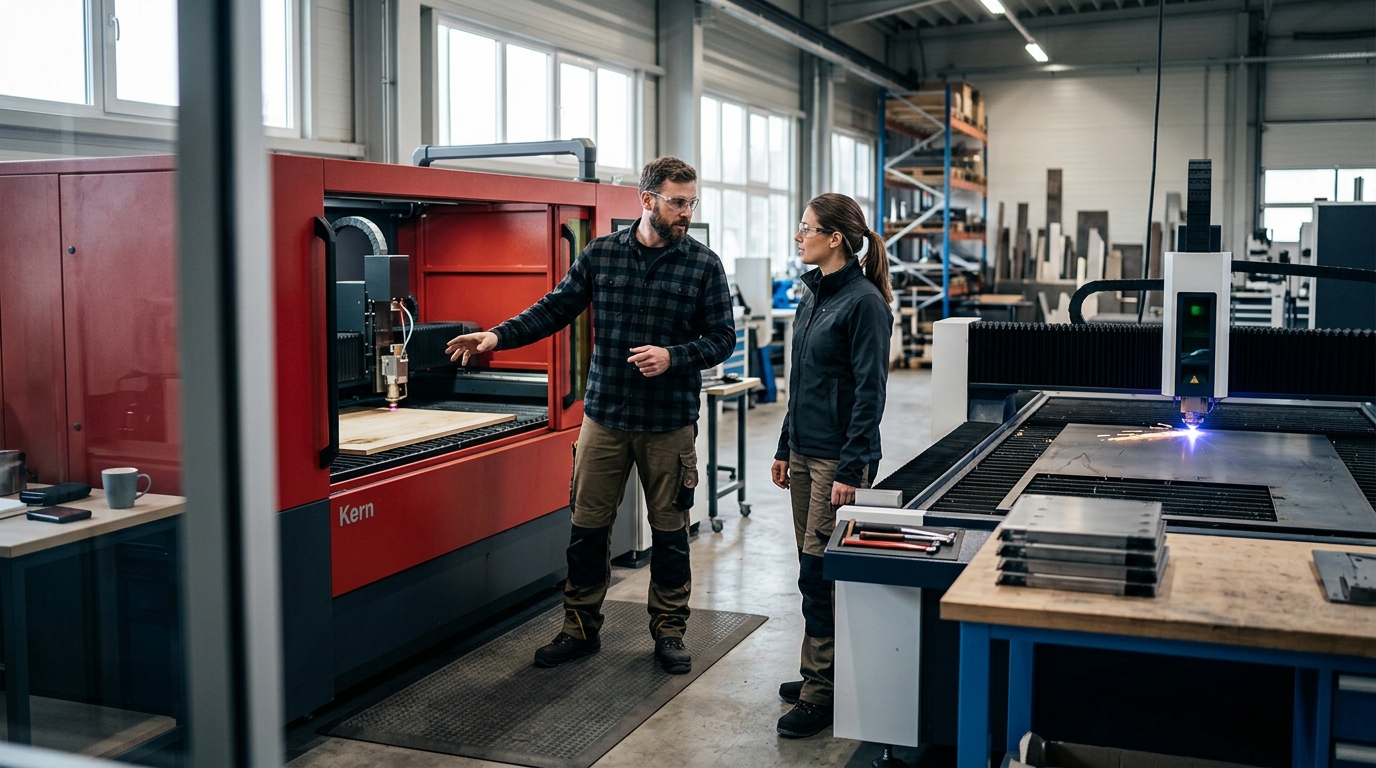
Choosing between CO2 and fiber laser cutting machines is one of the most critical decisions for any manufacturing facility. The global laser cutting market is projected to grow significantly, with industry reports indicating that the fiber laser segment is expanding at a faster rate due to its efficiency in metal processing. According to recent market analysis, the adoption of fiber lasers has surpassed CO2 systems in many industrial applications, particularly for thick metals. This shift is driven by the need for higher speed, lower operating costs, and reduced maintenance. Understanding the fundamental differences between these two technologies is essential for maximizing production output and minimizing downtime. (Kern Customer Login Area)
How CO2 and Fiber Lasers Work
To make an informed decision, you must first understand the underlying technology. CO2 laser is a type of laser where the active medium is a mixture of carbon dioxide, nitrogen, and other gases. This gas mixture is excited by an electrical discharge to produce a laser beam with a wavelength of 10.6 micrometers. This wavelength is highly absorbed by non-metals, making CO2 lasers exceptionally effective for cutting wood, acrylic, and textiles. However, metals reflect this wavelength, requiring higher power levels to achieve effective cutting, which can lead to inefficiencies.
In contrast, fiber laser is a type of laser in which the gain medium is a fiber optic cable doped with rare-earth elements such as erbium or ytterbium. The laser beam is generated directly within the fiber and delivered to the workpiece via the same fiber. This method results in a beam with a wavelength of approximately 1.07 micrometers. This wavelength is strongly absorbed by metals, allowing for much higher cutting speeds and better energy efficiency compared to CO2 systems. The direct generation of the beam also eliminates the need for complex mirror alignments found in CO2 systems.
Material Compatibility and Applications
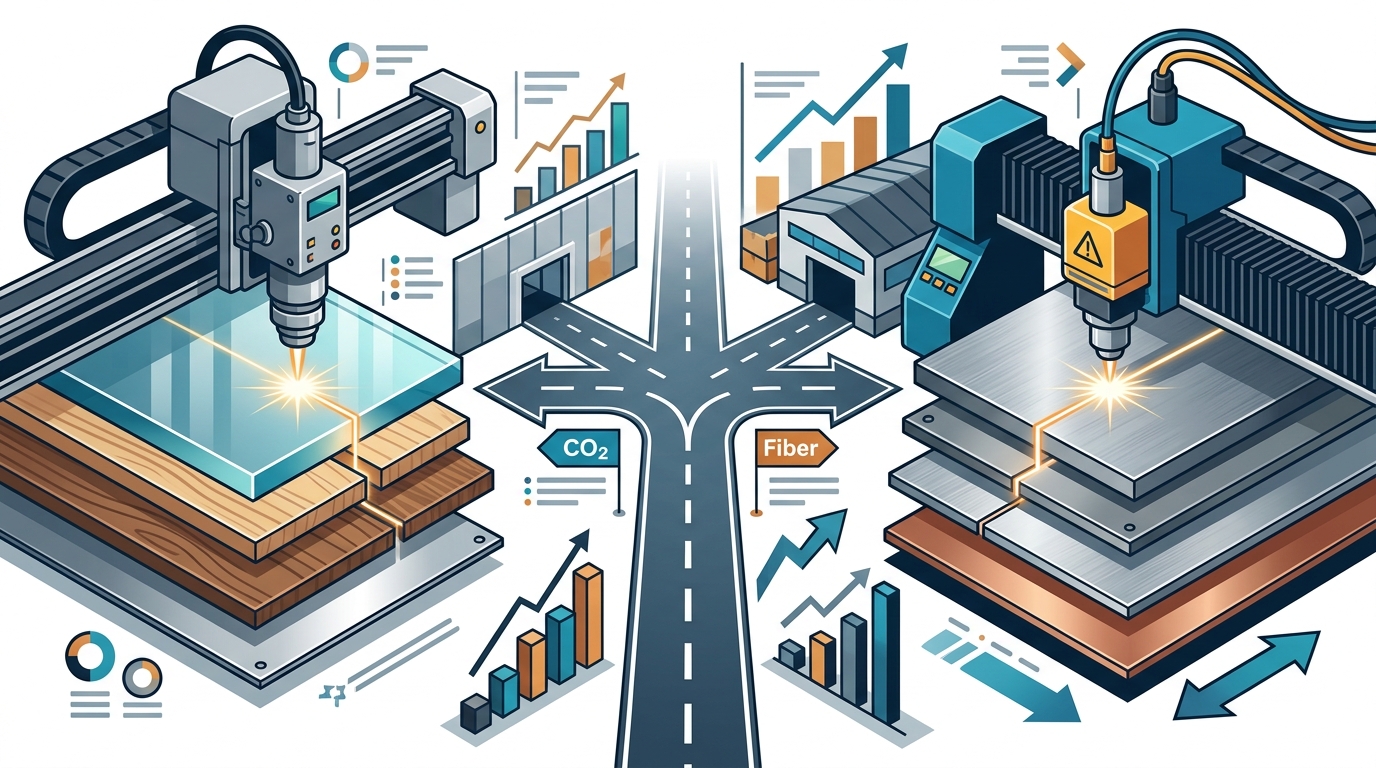
The choice between CO2 and fiber often comes down to the materials you process daily. CO2 lasers have historically been the go-to solution for non-metallic materials. They excel at cutting acrylic, wood, leather, and foam with clean, polished edges. If your business relies heavily on signage, awards, or custom crafts, a CO2 system like the OptiFlex offers superior versatility for these applications. The OptiFlex is designed to handle a wide range of materials, including plastics and textiles, making it a popular choice for diverse manufacturing environments.
Fiber lasers, on the other hand, are specialized for metals. They are ideal for cutting stainless steel, mild steel, aluminum, brass, and copper. The high absorption rate of metals to the fiber laser wavelength allows for faster cutting speeds and thinner kerf widths. For applications involving metal cutting, fiber lasers provide a significant advantage in productivity. However, they are generally not suitable for cutting thick acrylic or wood, as these materials do not absorb the fiber wavelength efficiently and may melt or burn unpredictably.
Efficiency and Operating Costs
Energy efficiency is a major differentiator between the two technologies. Fiber lasers are known for their high electrical-to-optical conversion efficiency, often exceeding 30%, whereas CO2 lasers typically operate at around 10-15% efficiency. This means that for the same output power, a fiber laser consumes significantly less electricity. Over time, this translates to substantial cost savings, especially in high-volume production environments. The reduced energy consumption also lowers the cooling requirements, further decreasing operational expenses.
Additionally, fiber lasers require less gas for cutting. While CO2 systems often rely on assist gases like oxygen or nitrogen at high pressures, fiber systems can often achieve similar results with lower gas consumption. This reduction in gas usage contributes to lower overall operating costs. For businesses looking to optimize their budget, the EcoFlex offers an economical entry point for those who still require the versatility of CO2 technology, while the FiberCELL provides a dedicated solution for pure metal cutting efficiency.
Maintenance and Reliability
Maintenance requirements vary significantly between CO2 and fiber lasers. CO2 systems require regular maintenance of the laser tube, mirrors, and lenses. The gas mixture in the tube degrades over time and must be replenished or replaced. Mirrors need frequent cleaning and alignment to ensure beam quality. This ongoing maintenance can lead to increased downtime and higher labor costs. In contrast, fiber lasers are virtually maintenance-free. The fiber optic cable does not degrade, and there are no mirrors to align. The only regular maintenance typically involves cleaning the lenses and checking the cooling system.
The reliability of fiber lasers is another key advantage. With fewer moving parts and no gas tubes to break, fiber systems offer greater uptime. This reliability is crucial for businesses that need consistent production schedules. The LaserCELL system, for example, combines high performance with a safety enclosure, ensuring that operators can work efficiently without compromising on safety or maintenance concerns. The robust design of fiber systems makes them ideal for busy factory floors and high-traffic areas.
Kern Laser Systems Solutions
Kern Laser Systems has been a leader in the laser industry since 1982. Founded by Gerald Kern, the company has built a reputation for manufacturing high-quality, versatile laser systems. Kern offers a range of solutions to meet different business needs, from small format engraving to large format cutting. Their dedication to quality and customer service is evident in every machine they produce. Whether you need a CO2 laser for diverse materials or a fiber laser for metal cutting, Kern has a system that fits your requirements.
The OptiDual system represents the pinnacle of high-production laser cutting, offering dual laser capabilities for increased throughput. For those who need a compact yet powerful solution, the Micro system provides flexibility in a small footprint. Each Kern laser is designed with the customer's needs in mind, ensuring versatility and profitability. By choosing Kern, you are investing in a system that is built to last and perform.
Key Takeaways
- Technology Difference: CO2 lasers use a gas mixture and are best for non-metals, while fiber lasers use a fiber optic cable and are optimized for metals.
- Efficiency: Fiber lasers offer higher electrical-to-optical conversion efficiency, leading to lower energy costs and reduced cooling requirements.
- Maintenance: Fiber lasers require significantly less maintenance than CO2 systems, which need regular tube and mirror upkeep.
- Material Suitability: Use CO2 for acrylic, wood, and leather. Use fiber for stainless steel, aluminum, and mild steel.
- Kern's Expertise: Kern Laser Systems has been manufacturing laser equipment since 1982, offering both CO2 and fiber solutions.
- Versatility: The OptiFlex is a popular CO2 system for diverse materials, while the FiberCELL is dedicated to metal cutting.
- Reliability: Fiber systems provide greater uptime due to their solid-state design and lack of complex optical alignments.
Frequently Asked Questions
Which is better for cutting acrylic, CO2 or fiber?
CO2 lasers are significantly better for cutting acrylic. The 10.6 micrometer wavelength of CO2 lasers is highly absorbed by acrylic, resulting in clean, polished edges. Fiber lasers are not suitable for acrylic as they do not absorb the wavelength efficiently.
Do fiber lasers require more maintenance than CO2?
No, fiber lasers require less maintenance. They do not have laser tubes that need replacement or mirrors that need alignment. CO2 systems require regular maintenance of the gas tube, mirrors, and lenses.
Can a CO2 laser cut metal?
Yes, CO2 lasers can cut thin metals, but it is less efficient than using a fiber laser. CO2 lasers require higher power levels to cut metal, which increases energy consumption and reduces cutting speed. Fiber lasers are the preferred choice for metal cutting.
What is the lifespan of a CO2 laser tube?
The lifespan of a CO2 laser tube varies depending on usage and maintenance, but it typically lasts between 10,000 and 20,000 hours. Fiber lasers, on the other hand, have a lifespan of over 100,000 hours, making them a more durable long-term investment.
Which Kern laser system is best for beginners?
The EcoFlex is an excellent choice for beginners due to its economical price and user-friendly design. It offers the versatility of a CO2 laser system, allowing users to experiment with various materials like wood, acrylic, and leather.
Is it safe to operate a fiber laser in a classroom?
Yes, systems like the LaserCELL are designed with safety enclosures that allow them to be placed in high-traffic areas, including university classrooms. The Class 2 safety enclosure ensures that operators are protected from laser exposure.
How does Kern support its customers?
Kern provides comprehensive technical support, including online resources, customer login access, and direct assistance. Their team is dedicated to helping customers maximize the performance of their laser systems through training and troubleshooting.
Contact Us
Ready to upgrade your manufacturing capabilities? Contact Kern Laser Systems today to discuss your specific needs and find the perfect laser solution for your business. Our team of experts is here to help you make the right choice. Visit our contact page to request a quote or schedule a consultation. Experience the quality and reliability of Kern Laser Systems, proudly manufactured in the USA.