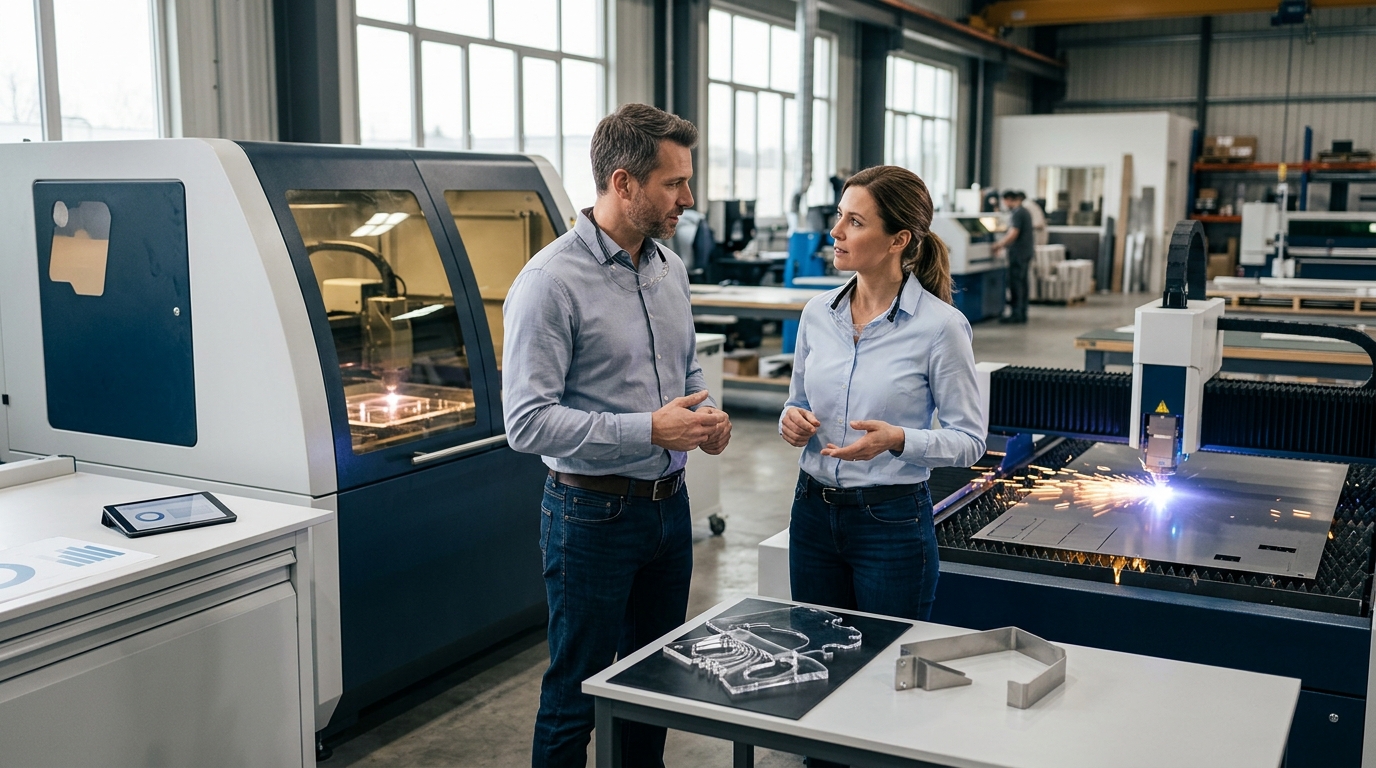
Industrial manufacturing is undergoing a rapid technological shift. According to recent industry analyses, fiber laser adoption has grown by over 20% annually in recent years, driven by the need for higher throughput and lower operational costs in metal fabrication. This surge is not merely a trend but a structural change in how shops approach production efficiency. Understanding the fundamental differences between CO2 and fiber laser cutting systems is critical for business owners and engineers who need to make capital expenditure decisions that impact long-term profitability.
Fundamental Differences in Technology
To make an informed decision, one must first understand the core mechanics of each system. CO2 lasers are gas lasers that use a mixture of carbon dioxide, nitrogen, and helium gases to generate a beam. This beam is typically directed via mirrors and lenses to the workpiece. In contrast, fiber lasers are solid-state lasers that use doped optical fibers to amplify the beam. This fundamental difference dictates their performance characteristics.
The beam quality of a fiber laser is generally superior. It can be focused to a much smaller spot size, allowing for finer detail and faster cutting speeds on thin to medium metals. CO2 lasers, while powerful, have a larger spot size and require more complex optical paths. This complexity can lead to higher maintenance needs over time. Kern Laser Systems has long recognized the value of precision engineering, offering systems like the OptiFlex for versatile CO2 applications and the FiberCell for pure metal cutting.
Material Compatibility and Applications
The choice between these technologies often hinges on the materials you process daily. CO2 lasers are renowned for their versatility across non-metals. They cut acrylic, wood, leather, and foam with exceptional edge quality. This makes them the preferred choice for signage, advertising displays, and craft industries. If your business relies heavily on engraving awards or cutting preprinted materials, a CO2 system is likely your best option.
However, when it comes to metals, fiber lasers dominate. They are highly efficient at cutting reflective metals like copper, brass, and aluminum, which can be challenging for CO2 lasers. Fiber lasers also excel at cutting thick steel plates with greater speed and lower gas consumption. For shops focused on industrial fabrication, aerospace components, or automotive parts, the fiber laser is the superior tool. You can explore more about laser applications and materials to see how these technologies apply to your specific needs.
Efficiency and Operational Costs
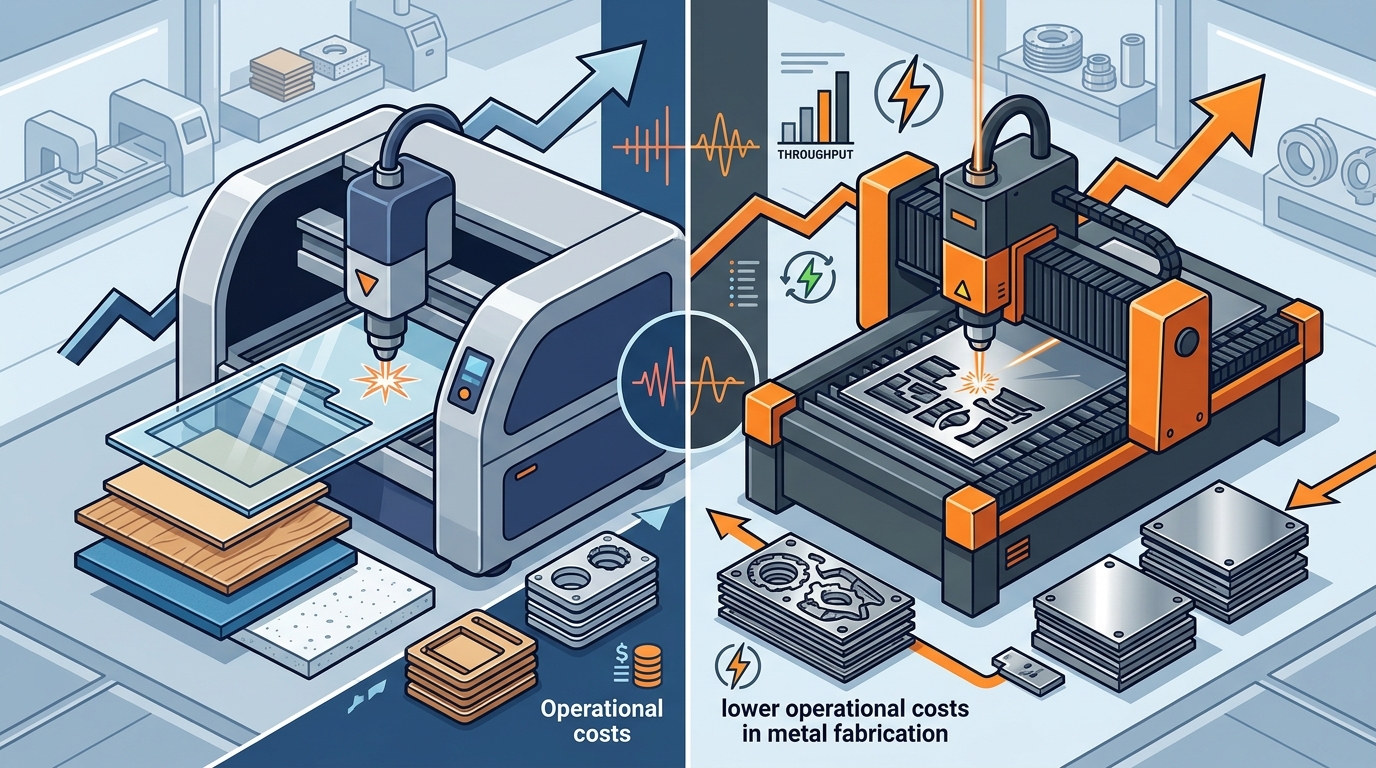
Operational efficiency is a major driver in the shift toward fiber technology. Fiber lasers are significantly more energy-efficient. They convert electrical power into laser light with an efficiency of around 30-40%, whereas CO2 lasers typically operate at 10-15% efficiency. This means a fiber laser can cut the same amount of material using a fraction of the electricity. Over the lifespan of the machine, this results in substantial savings on utility bills.
Furthermore, fiber lasers require less assist gas. While CO2 systems often rely on compressed air or nitrogen at high pressures, fiber lasers can often cut mild steel with compressed air alone, reducing gas costs dramatically. The initial investment for a fiber laser is higher, but the total cost of ownership (TCO) is often lower due to these operational savings. For more details on our laser cutting solutions, consider how these efficiency metrics impact your bottom line.
Maintenance and Reliability
Maintenance requirements differ significantly between the two systems. CO2 lasers require regular maintenance of the laser tube, mirrors, and lenses. The gas mixture may need replenishment, and the optical path must be aligned periodically to ensure beam quality. This can lead to downtime and increased labor costs. Fiber lasers, being solid-state, have no gas tubes to replace and no mirrors to align in the traditional sense. The laser source is enclosed and sealed, requiring minimal maintenance.
This reliability is crucial for high-production environments. Downtime in a manufacturing shop can be costly. The FiberCell system from Kern Lasers includes a safety enclosure and is designed for high performance with minimal intervention. In contrast, the OptiFlex CO2 system offers robust performance for non-metal applications but requires more attentive care of its optical components. Understanding these maintenance profiles is key to planning your shop's workflow.
Selection Guide for Your Shop
Choosing the right machine depends on your specific business model. Consider the following factors when making your decision:
- Primary Material: Do you cut mostly metals or non-metals?
- Volume: Are you doing high-volume production or low-volume prototyping?
- Budget: What is your initial capital budget versus long-term operational budget?
- Space: Do you have the space for a large CO2 system with its associated gas tanks?
The table below summarizes the key differences to help you decide.
| Feature | CO2 Laser | Fiber Laser |
|---|---|---|
| Best For | Non-metals (Acrylic, Wood, Leather) | Metals (Steel, Aluminum, Copper) |
| Energy Efficiency | Lower (10-15%) | Higher (30-40%) |
| Maintenance | High (Mirrors, Lenses, Gas) | Low (Sealed Source) |
| Cutting Speed (Thin Metal) | Slower | Very Fast |
| Initial Cost | Lower | Higher |
Key Takeaways
- Kern Laser Systems was founded in 1982, bringing decades of expertise to laser manufacturing.
- CO2 lasers are ideal for non-metallic materials like acrylic, wood, and leather.
- Fiber lasers are superior for cutting metals, especially reflective ones like copper and brass.
- Fiber lasers offer significantly higher energy efficiency, reducing operational costs.
- Maintenance for fiber lasers is lower due to the solid-state design and lack of gas tubes.
- The OptiFlex is a popular CO2 system for versatile applications.
- The FiberCell provides high-performance metal cutting with safety enclosures.
Frequently Asked Questions
Which laser is better for cutting acrylic?
CO2 lasers are generally better for cutting acrylic. They produce a polished, clear edge that is often desirable for signage and displays. Fiber lasers can cut acrylic but may result in a rougher edge and is less cost-effective for this material.
Can a fiber laser cut wood?
While fiber lasers can cut wood, it is not their primary strength. CO2 lasers are more commonly used for wood because they provide better edge quality and are more efficient for non-metallic materials. However, fiber lasers can be used for thin wood if metal cutting is the primary focus.
What is the lifespan of a CO2 laser tube?
A CO2 laser tube typically lasts between 10,000 and 20,000 hours, depending on usage and maintenance. Fiber laser sources, on the other hand, can last up to 100,000 hours, significantly reducing replacement costs.
Is fiber laser cutting safe for all metals?
Fiber lasers are safe for most metals when proper safety protocols are followed. They are particularly effective on reflective metals like copper and brass, which can be difficult for CO2 lasers. Always consult safety guidelines and use appropriate enclosures.
How does the cost of operation compare?
Fiber lasers have lower operational costs due to higher energy efficiency and reduced gas consumption. While the initial investment is higher, the long-term savings on electricity and maintenance often outweigh the upfront cost.
Do I need a chiller for a fiber laser?
Yes, fiber lasers require cooling systems to maintain optimal performance. However, modern fiber lasers often have integrated cooling systems that are more efficient than the external chillers required for many CO2 systems.
What software is used for Kern laser systems?
Kern Laser Systems utilizes KCAM laser software for precise control and programming of their machines. This software ensures accurate cutting and engraving for various applications.
Contact Us for a Quote
Choosing the right laser cutting machine is a significant decision that impacts your production capabilities and profitability. Whether you need the versatility of a CO2 system for non-metals or the power of a fiber laser for metals, Kern Laser Systems has the expertise to guide you. Our team is ready to help you select the perfect system for your needs. Contact us today to request a quote or learn more about our large format laser cutting systems. Visit our contact page to get started.