
Fiber Laser Cutting System Pricing and Total Cost of Ownership for Metal Fabricators
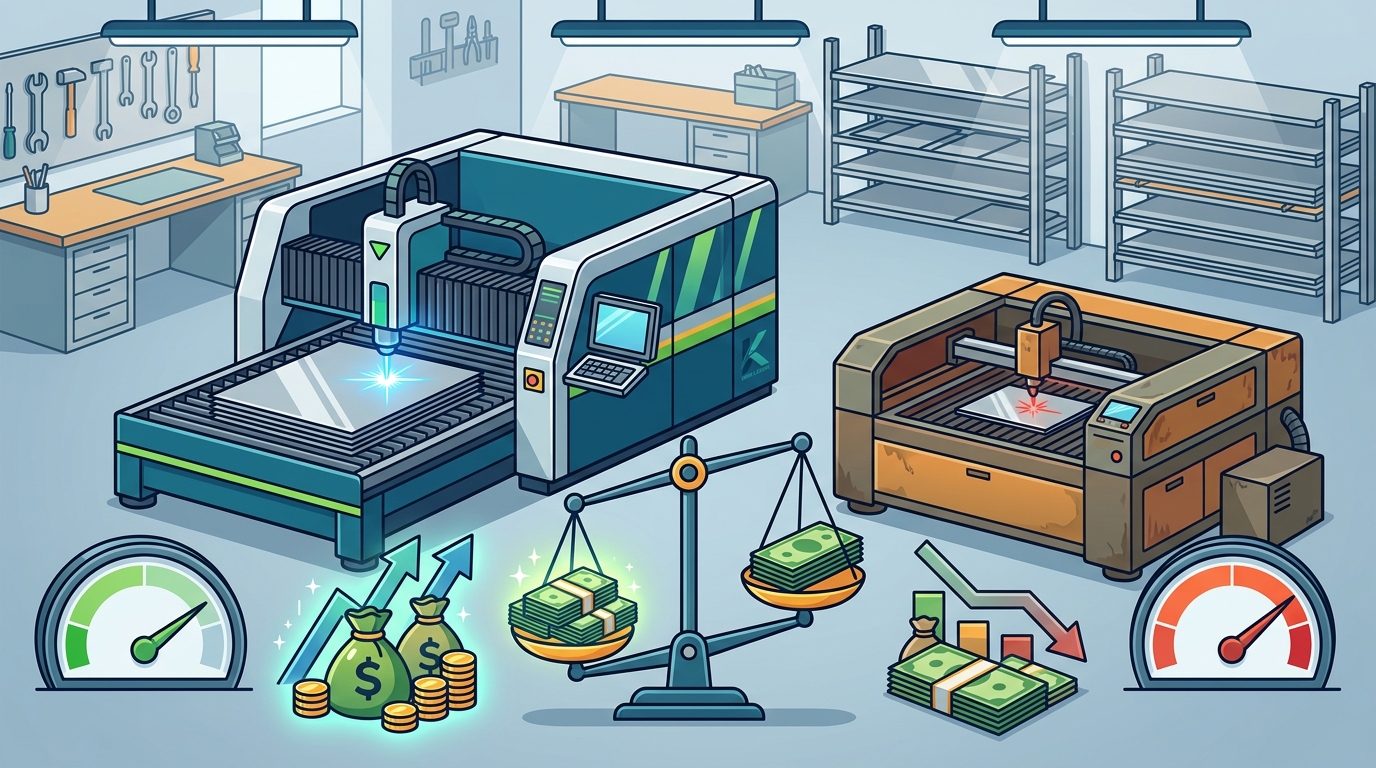
The industrial laser market has undergone a seismic shift in the last decade. Fiber laser cutting systems have rapidly displaced traditional CO2 technology for metal fabrication due to superior energy efficiency and cutting speeds. According to recent industry analyses, fiber lasers can consume up to 70% less electricity than comparable CO2 systems. This dramatic reduction in operational overhead fundamentally alters the financial model for modern machine shops. Understanding the true cost of ownership is no longer optional; it is the primary determinant of long-term profitability.
Understanding Fiber Laser Pricing Models
When evaluating a fiber laser cutting system, the initial purchase price is only the tip of the iceberg. Pricing structures vary significantly based on the laser source power, table size, and auxiliary features. High-power fiber lasers, typically ranging from 3kW to 6kW for general fabrication, command a premium upfront cost. However, this investment is justified by the exponential increase in throughput.
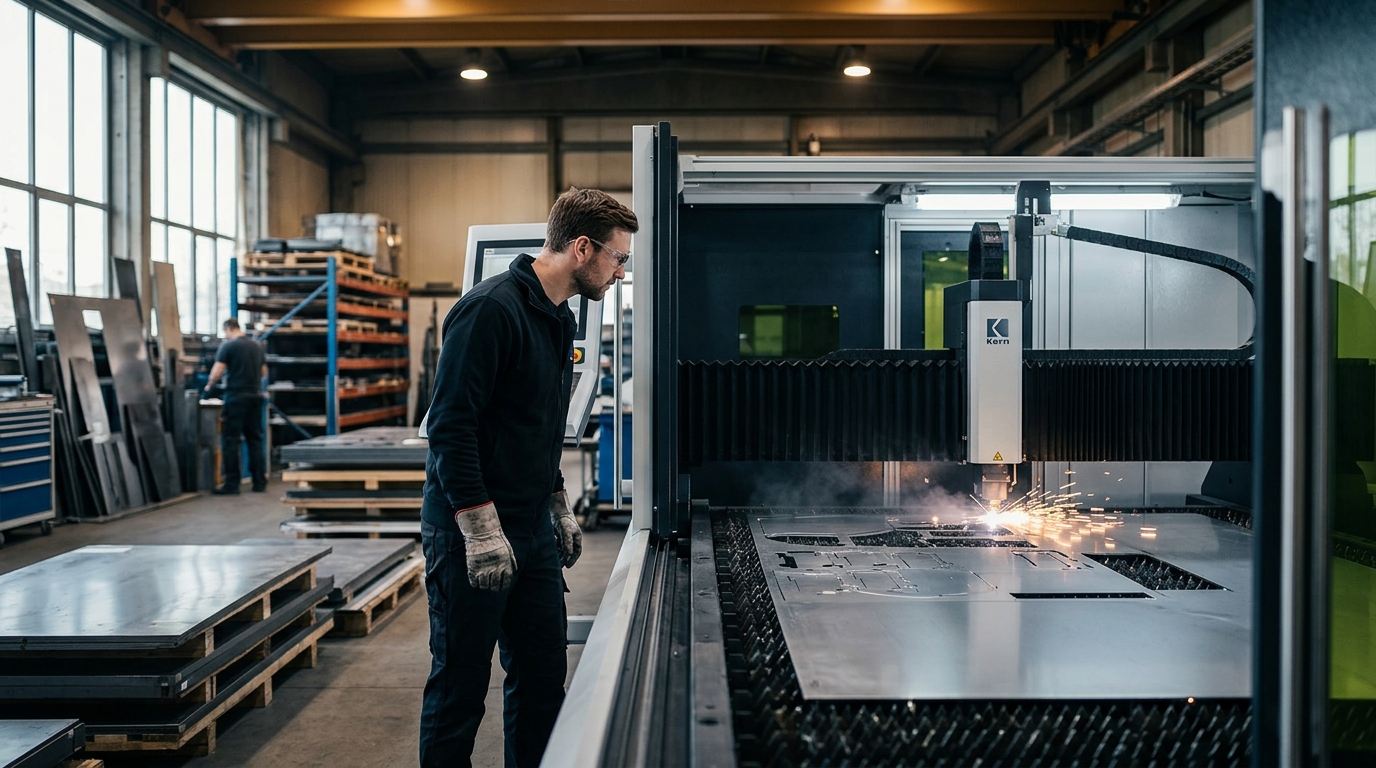
Manufacturers like Kern Laser Systems design their machines to balance performance with affordability. The FiberCELL series, for instance, is engineered as a compact sheet metal cutting laser capable of handling stainless steel, mild steel, aluminum, brass, and copper. The pricing for such systems is influenced by the inclusion of safety enclosures, which are critical for Class 2 laser safety compliance in high-traffic factory environments.
It is essential to distinguish between the cost of the laser source and the cost of the CNC motion system. The laser source, which generates the beam, is the most expensive component. The CNC system, including the table and gantry, provides the precision movement. Kern’s approach integrates these components seamlessly, ensuring that the metal cutting capabilities are optimized from the factory floor to the final product.
Total Cost of Ownership Breakdown
Total Cost of Ownership (TCO) extends far beyond the invoice date. It encompasses energy consumption, maintenance, consumables, and potential downtime. For metal fabricators, energy costs are a major variable. Fiber lasers are significantly more efficient than CO2 lasers because they do not require a gas mixture or a complex optical path that degrades over time.
Maintenance and Consumables are the next critical factor. CO2 lasers require regular mirror alignments and gas refills. In contrast, fiber lasers are largely maintenance-free regarding the optical path. The primary consumables are the cutting nozzle and the assist gas. Kern’s laser safety features, such as the fully enclosed design, also reduce the risk of accidental damage to sensitive optical components, further lowering long-term repair costs.
Another hidden cost is the learning curve. Operators must be trained to handle high-power fiber beams safely. Kern provides comprehensive technical support and training resources to ensure that your team can operate the KCAM Laser Software efficiently. This software integration allows for precise control over cutting parameters, reducing material waste and improving edge quality.
Kern Laser Systems: A Trusted Manufacturer
Kern Laser Systems was founded in 1982 by Gerald Kern, with the main objective to design and manufacture top-quality industrial laser cutting and laser engraving machines to meet demanding production schedules. The company headquarters are located in the beautiful lakes country of Minnesota. The facility consists of a modern 90,000 sq. ft. building with 50 full-time employees.
Kern is a name you can trust. We wouldn't put our name on it, if we weren't proud of it. The company’s dedication to quality is evident in its manufacturing process. Operating a factory in a small town in the Midwest certainly has advantages. Employees at Kern have the good fortune of knowing each other through work, family, sports and community activities. Bringing those relationships to the workplace combined with a great Midwestern work ethic makes for a dynamic and exciting place to work.
Versatility and profitability go hand in hand with a Kern laser. Changing from cutting light metal to thick plate is seamless with the right configuration. The LaserCELL and OptiFlex systems, while primarily CO2, share the same rigorous engineering standards that apply to the FiberCELL. This consistency ensures that fabricators receive reliable performance regardless of the technology chosen.
System Comparison Matrix
To help fabricators make informed decisions, we have compiled a comparison of key laser cutting technologies. This table highlights the differences in application, material compatibility, and operational characteristics.
| System Type | Primary Material | Energy Efficiency | Maintenance Level | Ideal Application |
|---|---|---|---|---|
| FiberCELL | Metals (Steel, Aluminum, Brass) | Very High | Low | High-speed metal fabrication |
| OptiFlex | Acrylic, Wood, Textiles | Moderate | Moderate | Non-metal engraving and cutting |
| LaserCELL | Acrylic, Wood, Plastics | Moderate | Moderate | Safety-enclosed general purpose |
| EcoFlex | Acrylic, Wood, Leather | Moderate | Low | Entry-level large format cutting |
Key Takeaways
- Fiber lasers offer up to 70% energy savings compared to CO2 systems, significantly reducing operational costs.
- The FiberCELL system is designed for compact sheet metal cutting with a Class 2 safety enclosure.
- Kern Laser Systems has been manufacturing laser equipment since 1982, ensuring decades of engineering expertise.
- Maintenance costs for fiber lasers are lower due to the lack of mirrors and gas mixtures required by CO2 lasers.
- The KCAM Laser Software provides precise control over cutting parameters to minimize waste.
- Kern’s 90,000 sq. ft. facility in Minnesota employs 50 full-time staff dedicated to quality manufacturing.
- Total Cost of Ownership includes energy, maintenance, consumables, and training, not just the purchase price.
Frequently Asked Questions
What is the average lifespan of a fiber laser source?
A high-quality fiber laser source typically lasts between 100,000 and 100,000 hours. This longevity reduces the frequency of expensive replacements compared to other laser technologies.
How does Kern Laser Systems support metal cutting applications?
Kern provides the FiberCELL system, which is specifically engineered for cutting stainless steel, mild steel, aluminum, brass, and copper. The system includes a safety enclosure for use in high-traffic areas.
Is the FiberCELL system suitable for a university classroom?
Yes, the FiberCELL features a Class 2 safety enclosure, allowing it to be placed in high-traffic areas such as busy factory floors and university classrooms safely.
What is the role of KCAM software in laser cutting?
KCAM Laser Software is Kern’s proprietary control system. It manages the CNC motion, laser power, and cutting speed to ensure precise alignment and efficient cutting of materials.
Where are Kern Laser Systems manufactured?
Kern Laser Systems is proudly manufactured in the USA. The company operates a 90,000 sq. ft. facility in Wadena, Minnesota, ensuring strict quality control and domestic production standards.
What materials can the FiberCELL cut?
The FiberCELL is capable of cutting a variety of metals, including stainless steel, mild steel, aluminum, brass, and copper. It is not designed for non-metallic materials like acrylic or wood.
How does the EcoFlex compare to the FiberCELL?
The EcoFlex is an entry-level large format laser engraving and cutting system, primarily for non-metals like acrylic and wood. The FiberCELL is a dedicated metal cutting system with higher power and different optical technology.
Does Kern offer a warranty on their laser sources?
Yes, Kern provides a 3-year warranty on CO2 laser sources. For fiber systems, warranty terms may vary, so it is recommended to contact Kern directly for the latest warranty information on the FiberCELL.
Contact Kern Laser Systems
Ready to optimize your metal fabrication workflow? Kern Laser Systems offers tailored solutions for every budget and production need. Whether you are looking for a compact fiber cutter or a versatile large format system, our team is here to help.
Visit our Contact page to request a quote or schedule a consultation. You can also explore our blog for more insights into laser technology and manufacturing trends.