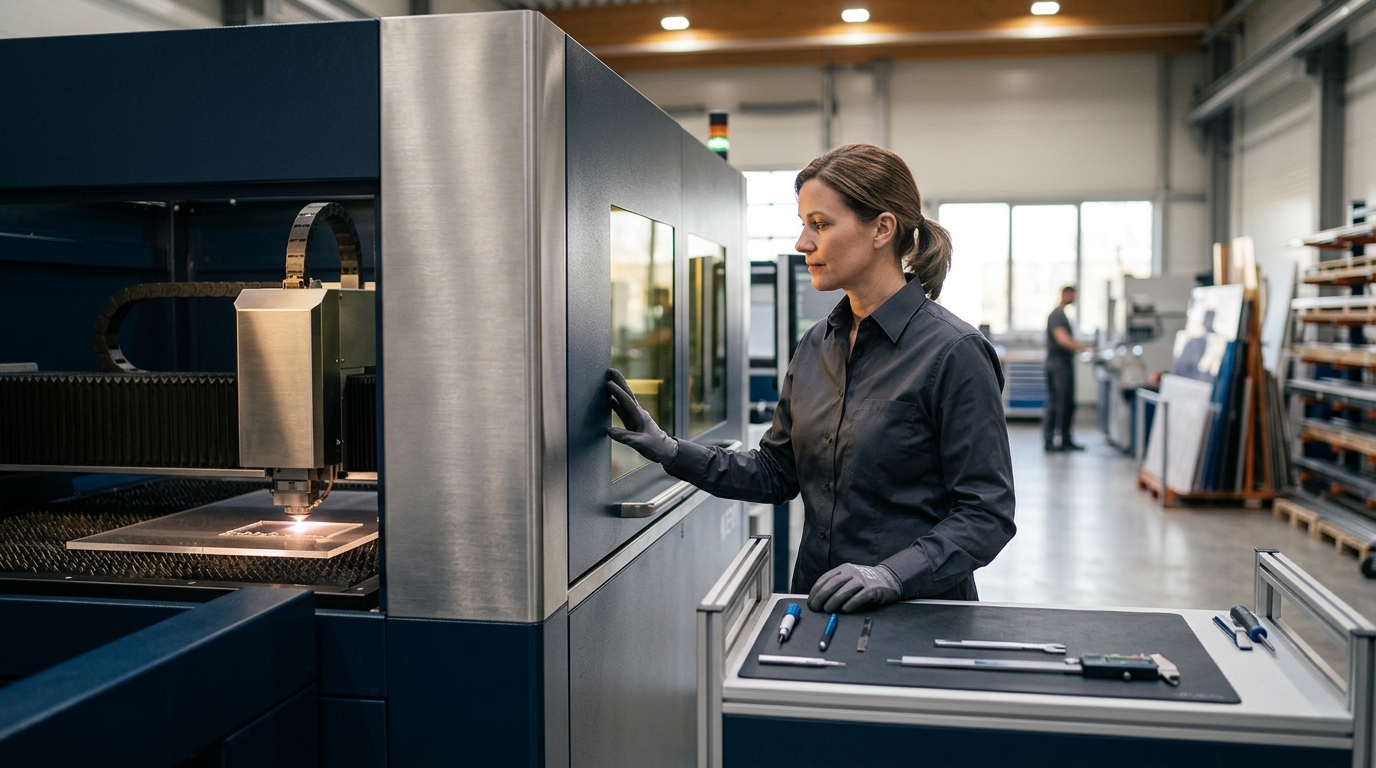
Essential Maintenance Standards for High-Performance Laser Cutting Systems
Industrial laser cutting systems represent a significant capital investment for modern manufacturing facilities. According to recent industry analyses, proper maintenance protocols can extend the operational lifespan of CO2 and fiber laser sources by up to 40 percent compared to neglected equipment. This statistic highlights the critical relationship between routine care and long-term profitability. For facility managers and production engineers, understanding these standards is not merely a best practice but a financial imperative. The precision of your cuts, the consistency of your edge quality, and the uptime of your production floor all depend on a rigorous adherence to maintenance schedules. (Kern Customer Login Area)
OptiFlex and Large Format System Care
The OptiFlex is Kern’s most popular large format laser cutting and engraving system. Its versatility in processing metal, acrylic, wood, and foam requires a specific approach to maintenance. Because the OptiFlex handles a wide variety of materials, the optical path is susceptible to different types of debris. Acrylic dust, for instance, can be particularly sticky and difficult to remove if left on lens surfaces. Wood cutting generates significant particulate matter that can clog assist gas nozzles. (Laser Cutting and Laser)
Regular inspection of the laser source is paramount. Kern provides a 3-year warranty on CO2 laser sources, but this coverage often requires proof of regular maintenance. The super pulsed high-quality laser sources used in these systems are sensitive to voltage fluctuations and cooling efficiency. Ensuring the chiller unit is functioning at peak efficiency prevents thermal drift, which directly impacts cut depth and width consistency.
For operators using the OptiFlex for preprinted materials, the K-Vision camera registration system requires periodic calibration. This feature allows for precise alignment and efficient cutting of preprinted materials. If the camera lenses are obscured by dust or oil mist, the registration accuracy drops, leading to material waste. Cleaning the camera housing and verifying the lens clarity should be part of the weekly maintenance routine.
FiberCELL Metal Cutting Maintenance
Fiber laser technology, as seen in the FiberCELL system, operates on different principles than CO2 lasers. The FiberCELL is a compact sheet metal cutting laser capable of processing stainless steel, mild steel, aluminum, brass, and copper. Because fiber lasers do not use gas-filled tubes, the maintenance focus shifts to the delivery system and the protective optics.
The nozzle is the first line of defense in the cutting head. For metal cutting applications, the assist gas pressure must be monitored regularly. Inconsistent gas pressure leads to dross formation on the bottom edge of the cut. This is particularly critical when cutting thicker materials like mild steel or stainless steel. The nozzle must be inspected for wear and replaced when the bore diameter deviates from the manufacturer's specifications.
The FiberCELL features a Class 2 safety enclosure, allowing it to be placed in high-traffic areas. This design choice means that the external surfaces and safety interlocks are subject to frequent human interaction. Checking the integrity of the safety doors and the functionality of the emergency stop buttons is essential for workplace safety. A compromised safety interlock can shut down the entire production line, causing significant downtime.
KCAM Software and Diagnostic Tools
Modern laser cutting systems are deeply integrated with software for control and diagnostics. Kern’s KCAM Laser Software serves as the brain of the operation. It manages the motion systems, laser power modulation, and gas flow parameters. Regular updates to the KCAM software ensure that the machine operates with the latest optimization algorithms.
The software provides diagnostic logs that can predict potential failures before they occur. These logs track the number of laser hours, the temperature of the laser source, and the status of the motion axes. By analyzing these data points, maintenance teams can schedule interventions during planned downtime rather than reacting to unexpected breakdowns. This proactive approach is a hallmark of high-performance manufacturing environments.
Furthermore, the KCAM software supports the Pipe & Tube Rotary attachment. This feature expands the application range of the laser system to cylindrical objects. Maintaining the rotary axis requires lubrication and alignment checks. If the rotary axis is misaligned, the cut quality on tubular products will suffer, leading to rework and material loss.
Daily Operational Protocols
Daily maintenance routines are the foundation of laser system longevity. These tasks are quick but critical for ensuring consistent performance. The first step in the daily routine is to inspect the assist gas supply. Ensure that the gas cylinders are full and that the pressure regulators are set to the correct values for the material being cut.
Cleaning the cutting bed is another essential daily task. Debris from previous cuts can accumulate on the bed rails and guides. This debris can interfere with the smooth movement of the gantry, leading to positioning errors. Using a soft brush or compressed air, remove all particulate matter from the bed and the surrounding area.
Inspecting the cutting nozzle for damage is also part of the daily check. A damaged nozzle can cause the assist gas to flow incorrectly, resulting in poor cut quality. If the nozzle shows signs of wear or deformation, replace it immediately. This simple step can prevent costly errors in the production run.
Preventive Maintenance Schedules
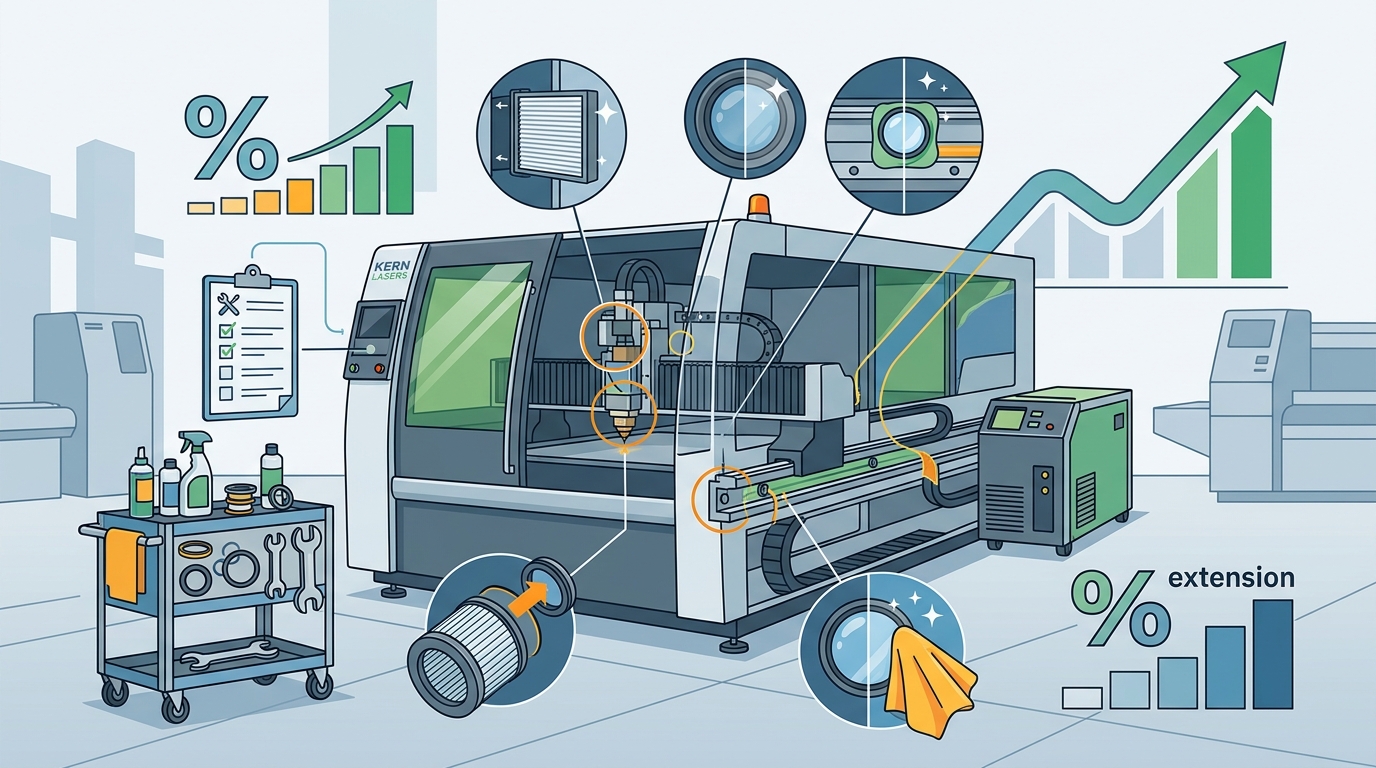
Beyond daily tasks, a structured preventive maintenance schedule is necessary for long-term system health. This schedule typically includes monthly, quarterly, and annual checks. Monthly tasks often involve cleaning the optical path. For CO2 lasers, this includes cleaning the output coupler and the focusing lens. For fiber lasers, it involves cleaning the collimating lens and the focusing lens.
Quarterly maintenance should include a thorough inspection of the motion system. This involves checking the belts, chains, and gears for wear. Lubricating the linear guides and ball screws is also crucial. Proper lubrication reduces friction and wear, ensuring precise movement over time. Kern Laser Systems recommends using only the lubricants specified in the user manual to avoid damaging the seals and bearings.
Annual maintenance is a comprehensive service that should be performed by certified technicians. This includes replacing the laser source if it has reached its end of life, checking the electrical connections, and recalibrating the entire system. This deep dive ensures that the machine operates at its original factory specifications.
Safety and Regulatory Compliance
Laser safety is a critical component of maintenance standards. Both CO2 and fiber lasers can pose significant hazards to operators if not properly maintained. The LaserCELL system, for example, features a fully enclosed Class 2 design. This enclosure protects operators from laser radiation and flying debris. However, the integrity of this enclosure must be maintained.
Regular inspection of the laser safety interlocks is essential. These interlocks prevent the laser from firing when the enclosure is open. If an interlock fails, the laser could operate with the door open, posing a severe risk to personnel. Testing these interlocks monthly ensures that they are functioning correctly.
Additionally, compliance with local and international laser safety standards is mandatory. This includes ensuring that the laser safety labels are visible and legible. It also involves providing appropriate personal protective equipment (PPE) to operators. The type of PPE required depends on the wavelength of the laser and the power output. For CO2 lasers, specific eyewear is needed to block the infrared radiation. For fiber lasers, different eyewear is required for the near-infrared wavelength.
Key Takeaways
- Warranty Protection: Adhering to Kern’s maintenance schedule is often required to keep the 3-year warranty on CO2 laser sources valid.
- Optical Path Integrity: Regular cleaning of lenses and mirrors prevents thermal damage and ensures cut quality.
- Nozzle Management: Worn nozzles are a primary cause of dross and poor edge quality in metal cutting.
- Software Diagnostics: Utilizing KCAM software logs allows for predictive maintenance and reduced downtime.
- Safety Interlocks: Monthly testing of safety interlocks is critical for operator protection in high-traffic environments.
- Lubrication: Proper lubrication of motion systems extends the life of linear guides and ball screws.
- Material Specificity: Different materials (acrylic vs. metal) require different cleaning and gas pressure protocols.
Frequently Asked Questions
How often should I clean the laser lenses?
Laser lenses should be cleaned daily or after every shift, depending on the material being cut. Materials that produce heavy smoke or debris, such as acrylic or wood, require more frequent cleaning to prevent thermal shock and damage to the optics.
What is the difference between CO2 and fiber laser maintenance?
CO2 lasers require regular cleaning of the optical path and replacement of gas tubes over time. Fiber lasers do not have gas tubes but require careful attention to the delivery optics and cooling systems. Fiber lasers generally have fewer consumables but are more sensitive to dust on the final focusing lens.
Can I perform maintenance on my Kern laser myself?
Basic daily maintenance tasks, such as cleaning the bed and inspecting nozzles, can be performed by operators. However, internal maintenance involving the laser source or electrical components should only be performed by certified technicians to ensure safety and warranty compliance.
How does the K-Vision camera affect maintenance?
The K-Vision camera requires regular cleaning of its lenses to maintain registration accuracy. If the camera is dirty, the system may fail to align preprinted materials correctly, leading to waste. Periodic calibration is also necessary to ensure precise alignment.
What should I do if my laser source loses power?
If the laser source loses power, check the gas supply and pressure settings first. Ensure that the cooling system is functioning correctly. If the issue persists, consult the KCAM software diagnostics for error codes and contact Kern Laser Systems technical support for assistance.
Is the FiberCELL suitable for high-traffic areas?
Yes, the FiberCELL features a Class 2 safety enclosure, making it suitable for placement in high-traffic areas such as busy factory floors and university classrooms. However, regular inspection of the safety interlocks is still required to ensure continued safety.
How can I extend the life of my laser source?
To extend the life of your laser source, ensure that the chiller is maintaining the correct temperature. Avoid voltage fluctuations by using a power conditioner. Follow the recommended maintenance schedule and use high-quality assist gases to prevent contamination of the optical path.
Contact Kern Laser Systems
Maintaining your laser cutting system to the highest standards ensures maximum uptime and product quality. Kern Laser Systems, with decades of experience since 1982, provides the tools and support you need to keep your operation running smoothly. For technical support, spare parts, or to schedule a service appointment, please visit our Contact page or explore our blog for more insights.