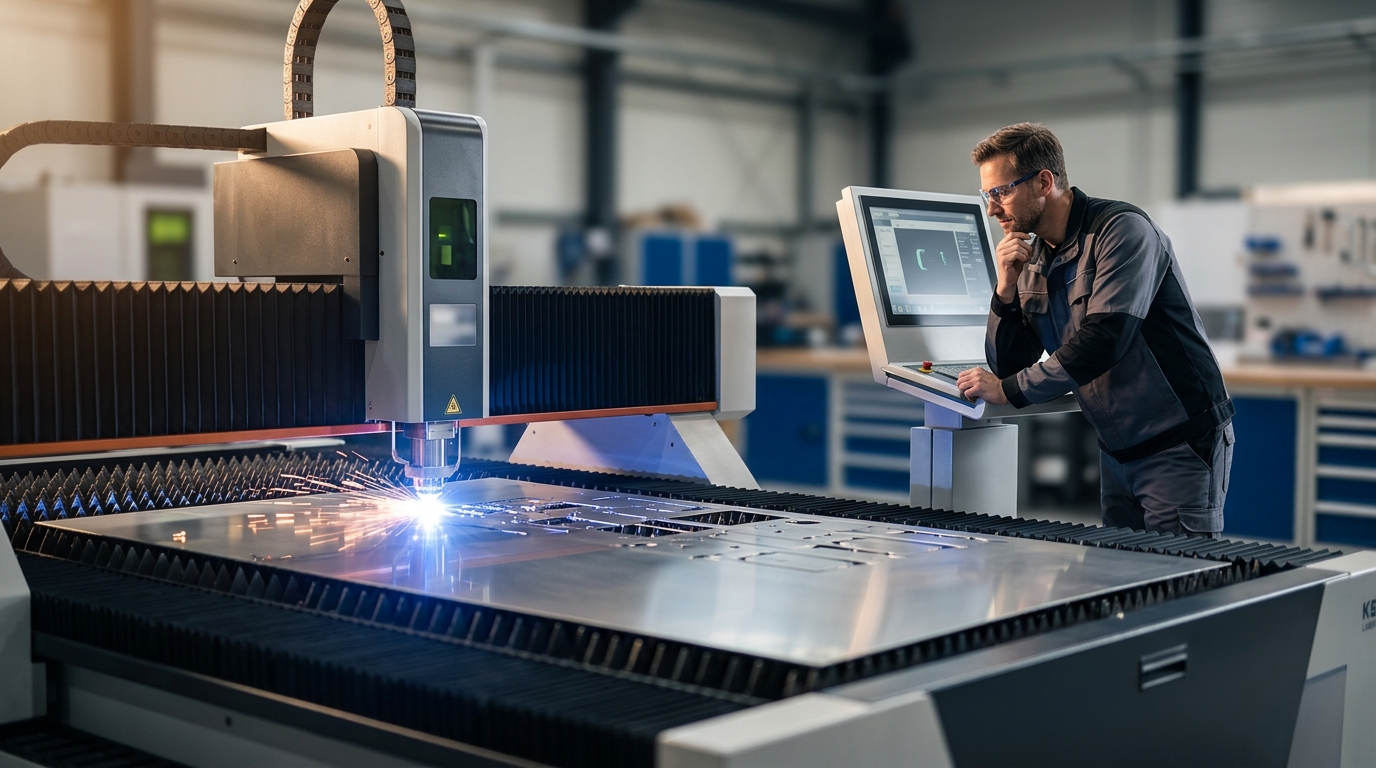
Modern metal fabrication is undergoing a significant transformation driven by the adoption of high-speed fiber laser technology. Kern Laser Systems has been at the forefront of this evolution since 1982, providing manufacturers with the tools needed to meet demanding production schedules. According to industry data, fiber lasers have captured over 70% of the new laser cutting machine market share globally, surpassing traditional CO2 systems due to their superior energy efficiency and cutting speed on reflective metals. This shift is not merely a trend but a fundamental change in how industrial shops approach material processing.
Understanding Core Technology Differences
Before diving into specific hardware metrics, it is essential to understand the fundamental difference between fiber and CO2 laser sources. Fiber laser cutting uses a solid-state laser source where the gain medium is an optical fiber doped with rare-earth elements. This design allows for exceptional beam quality and electrical-to-optical conversion efficiency, often exceeding 40%, compared to the 10-15% efficiency of traditional CO2 tubes. (Kern Customer Login Area)
For fabricators working with stainless steel, aluminum, and brass, fiber lasers offer distinct advantages. They cut these reflective metals faster and with less gas consumption than CO2 systems. However, the choice between a fiber system and a CO2 system often depends on the specific mix of materials. While fiber dominates metal cutting, CO2 systems remain competitive for thick acrylics and certain non-metal applications. Understanding this balance is critical for any shop evaluating new equipment. (About Kern Laser Systems)
Kern Laser Systems specializes in both large format CO2 systems and pure metal fiber cutters. Their laser cutting solutions are designed to handle a wide variety of materials, ensuring that manufacturers can choose the right tool for their specific production needs. The company's headquarters in Wadena, Minnesota, serves as a hub for innovation, where over 50 full-time employees contribute to the development of high-performance machinery.
Critical Hardware Specifications
When evaluating a fiber laser cutting system, several technical specifications will directly impact your return on investment. These parameters determine the machine's capability, speed, and versatility in a busy factory environment.
Laser Power and Source Quality
The wattage of the fiber laser source dictates the maximum thickness of metal you can cut and the speed at which you can do it. For general fabrication, sources ranging from 1kW to 6kW are common. Higher wattage sources, such as those found in the FiberCELL series, allow for faster cutting of thicker gauges and higher throughput on thin materials. It is crucial to verify the warranty on the laser source. Kern offers a 3-year warranty on their CO2 laser sources, reflecting their confidence in the durability and consistency of their components.
Bed Size and Format
The working area of the laser table determines the size of the parts you can produce without nesting multiple pieces. Large format systems are essential for industries like aerospace and heavy machinery, where single-piece cutting reduces assembly time. The OptiFlex is a high-performance large format system ideal for processing metal, acrylic, and wood. When selecting a bed size, consider not just the current part dimensions but also future growth and the ability to handle standard sheet sizes efficiently.
Chiller and Auxiliary Systems
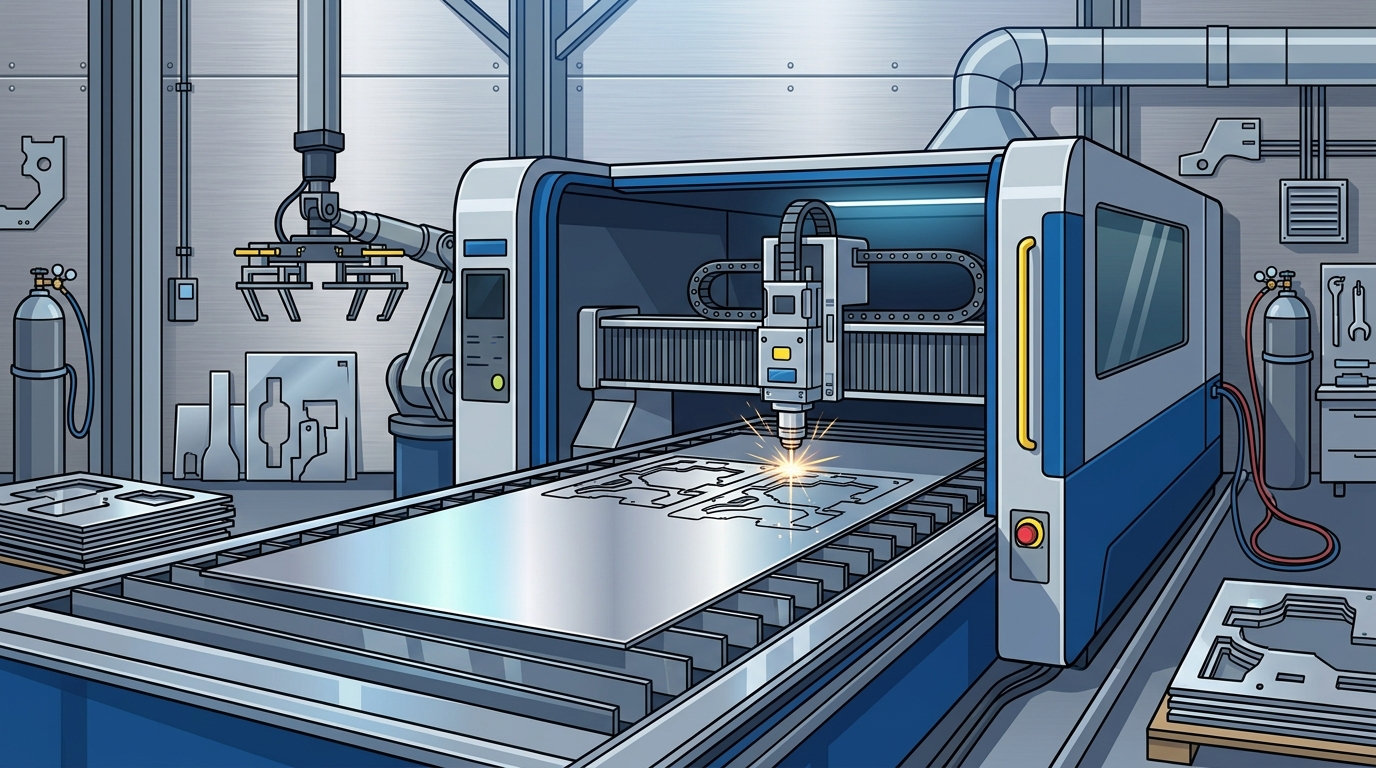
A fiber laser generates significant heat during operation. A high-quality chiller system is non-negotiable for maintaining beam stability and extending the life of the laser source. Look for systems with redundant cooling capabilities and precise temperature control. Additionally, consider the gas supply system. Fiber lasers typically use nitrogen or oxygen for cutting, and the purity and flow rate of these gases directly affect the edge quality of the cut.
The Importance of Safety Enclosures
Safety is a paramount concern in any manufacturing environment. Modern fiber laser cutters are often Class 2 or Class 1 machines, meaning they are fully enclosed to prevent laser radiation exposure. This enclosure design allows the machine to be placed in high-traffic areas, such as busy factory floors or university classrooms, without requiring a separate laser safety room.
The LaserCELL exemplifies this approach, offering a complete laser engraving and cutting machine with a fully enclosed design. This feature not only protects operators but also contains the fumes and debris generated during cutting, improving the overall workplace environment. When evaluating systems, inspect the quality of the enclosure windows, the interlock mechanisms, and the ventilation systems. A well-designed enclosure ensures compliance with OSHA and other regional safety regulations.
Software and Workflow Integration
The hardware is only as good as the software that drives it. KCAM Laser Software is a prime example of integrated control systems that streamline the workflow from design to production. Advanced software features include automatic nesting to maximize material utilization, parameter libraries for different materials, and camera registration systems for cutting preprinted materials.
The K-Vision Camera technology allows for precise alignment and efficient cutting of preprinted materials, reducing setup time and material waste. When evaluating a system, ask about the ease of use of the control interface, the availability of technical support for software updates, and the compatibility with standard CAD/CAM formats. A seamless integration between the laser controller and your existing design software is vital for maintaining high productivity.
System Comparison Matrix
To help you make an informed decision, here is a comparison of Kern Laser Systems' primary offerings based on their intended applications and capabilities.
| System Model | Primary Technology | Best For | Key Feature |
|---|---|---|---|
| OptiFlex | CO2 Laser | General Purpose, Acrylic, Wood | High-speed engraving and versatile material processing |
| FiberCELL | Fiber Laser | Stainless Steel, Aluminum, Brass | Compact sheet metal cutting with safety enclosure |
| LaserCELL | CO2 Laser | High-Traffic Areas, Education | Class 2 fully enclosed design for safety |
| EcoFlex | CO2 Laser | Entry-Level Large Format | Economical price with high productivity |
| Micro | CO2 Laser | Precision Small Parts | Flexible small format system for detailed work |
Key Takeaways
- Efficiency Gains: Fiber lasers offer significantly higher electrical-to-optical efficiency than CO2 systems, reducing operational costs.
- Material Versatility: While fiber excels at metals, CO2 systems remain superior for thick acrylics and certain non-metal applications.
- Safety First: Class 2 enclosed systems like the LaserCELL allow for safe operation in high-traffic environments.
- Software Integration: Advanced software like KCAM and K-Vision camera registration streamline workflows and reduce setup time.
- Domestic Manufacturing: Kern Laser Systems is proudly manufactured in the USA, ensuring high quality and reliable support.
- Warranty Coverage: Look for comprehensive warranties on laser sources, such as the 3-year warranty offered on CO2 systems.
- Scalability: Choose a system that can grow with your business, from entry-level large format to high-production dual laser systems.
Frequently Asked Questions
What is the main advantage of a fiber laser over a CO2 laser for metal?
Fiber lasers are more energy-efficient and cut reflective metals like aluminum and brass faster and with less gas consumption than CO2 lasers.
Is a safety enclosure required for fiber laser cutting systems?
While not always legally required for all classes, most modern fiber lasers are Class 2 or Class 1 enclosed systems to protect operators from radiation and contain fumes.
How does the K-Vision camera improve cutting accuracy?
The K-Vision camera registration system allows for precise alignment of preprinted materials, ensuring that the laser cuts exactly where intended without manual adjustment.
What materials can Kern Laser Systems cut?
Kern systems can process a wide range of materials including metals, acrylic, wood, leather, foam, and natural stone, depending on the specific machine model.
Where are Kern Laser Systems manufactured?
Kern Laser Systems is proudly manufactured in the USA, with its headquarters and factory located in Wadena, Minnesota.
What warranty is offered on Kern laser sources?
Kern offers a 3-year warranty on their CO2 laser sources, demonstrating their commitment to product reliability and customer satisfaction.
Can fiber lasers cut non-metal materials?
While primarily designed for metals, some fiber lasers can cut thin non-metals, but CO2 systems are generally preferred for materials like acrylic and wood.
Contact Us
Evaluating a fiber laser cutting system is a significant investment that requires careful consideration of your specific fabrication needs. Whether you are looking for a compact metal cutter or a large format versatile system, Kern Laser Systems offers the expertise and technology to help you succeed. Visit our contact page to request a quote or schedule a consultation with our team. We are here to help you find the perfect solution for your metal fabrication projects.