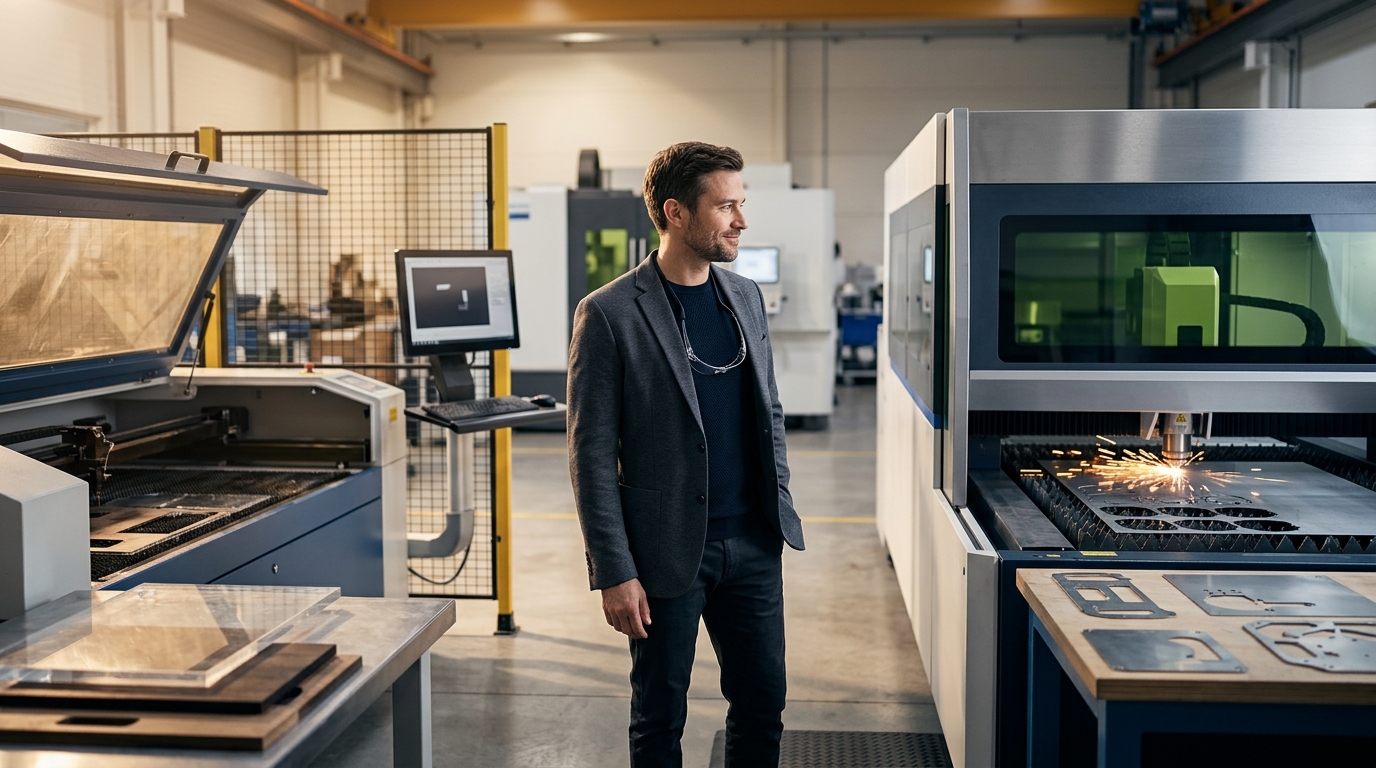
Choosing between CO2 and fiber laser cutting machines is one of the most critical decisions for any manufacturing facility. The global laser cutting market is projected to grow at a compound annual growth rate of over 10% through 2030, driven by the demand for precision and speed in industrial applications. This rapid expansion means that selecting the wrong technology can lead to significant operational bottlenecks and increased overhead costs. Understanding the fundamental differences in how these systems generate and deliver energy is essential for maximizing return on investment.
Fundamental Differences in Laser Generation
To make an informed decision, you must first understand the physics behind each technology. CO2 lasers use a gas mixture, typically carbon dioxide, nitrogen, and helium, to generate light. This process requires high electrical input to excite the gas molecules, resulting in a beam that is highly effective for non-metallic materials. Fiber lasers, on the other hand, use solid-state diodes to pump light into a fiber optic cable. This method is significantly more energy-efficient, often consuming up to 70% less power than traditional CO2 systems.
The efficiency gap is not just about electricity bills. It extends to the physical footprint and cooling requirements of the machine. Fiber lasers generally require less robust cooling infrastructure because they generate less waste heat. According to industry data from the International Laser Fuser Association, the shift toward solid-state lasers is accelerating due to these operational efficiencies. This makes fiber the preferred choice for high-volume metal production environments.
Material Compatibility and Versatility
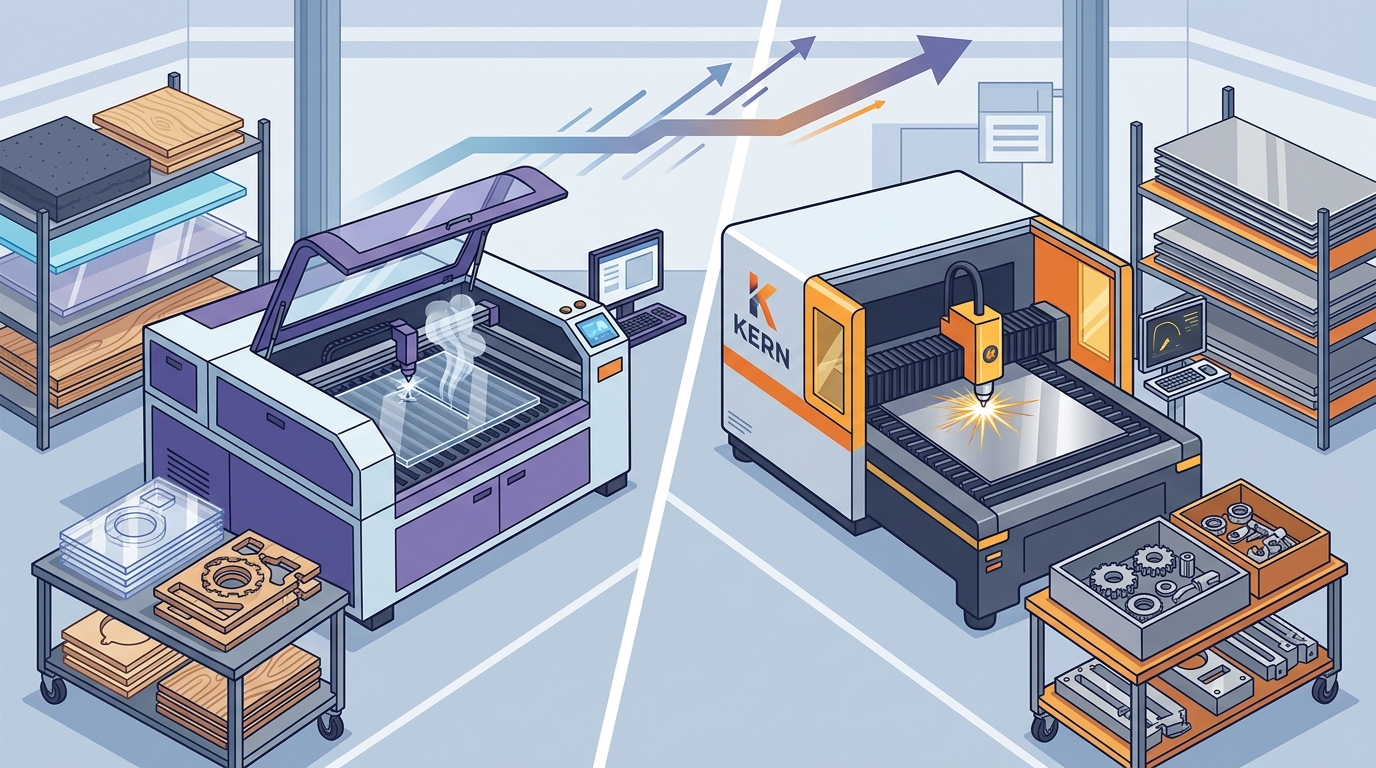
The most significant differentiator between these two technologies is the range of materials they can process effectively. CO2 lasers are the undisputed champions of non-metallic materials. They excel at cutting and engraving acrylic, wood, leather, foam, and textiles. The wavelength of a CO2 laser interacts beautifully with organic and plastic materials, allowing for clean, polished edges on acrylic without additional finishing.
Fiber lasers are primarily designed for metal cutting. They interact strongly with reflective metals like copper, brass, and aluminum, which are difficult for CO2 lasers to process efficiently. However, modern fiber technology has expanded its capabilities. While it can cut thin plastics, it often leaves charred edges, making it unsuitable for high-end signage or artistic applications. If your business model relies on a diverse mix of materials, including significant volumes of wood or acrylic, a CO2 system offers greater versatility.
For businesses focused exclusively on metal fabrication, the fiber laser provides superior cut quality on reflective surfaces. The beam focus is tighter, resulting in narrower kerf widths and less heat-affected zones. This precision is critical in industries like aerospace and medical device manufacturing, where tolerances are measured in microns. According to a 2024 report by Grand View Research, the demand for fiber lasers in metal processing has outpaced all other laser types due to these specific material advantages.
Operational Costs and Maintenance
When evaluating the total cost of ownership, operational expenses play a massive role. CO2 lasers require regular maintenance of the laser tube, mirrors, and gas refills. The laser tube itself has a limited lifespan and must be replaced periodically, adding to the long-term cost. Additionally, the electrical consumption of a CO2 system is substantially higher, which can impact your facility's utility budget significantly over time.
Fiber lasers are virtually maintenance-free regarding the light source. The diodes that generate the beam have a lifespan of over 100,000 hours, which translates to years of continuous operation without replacement. This reliability reduces downtime and eliminates the recurring cost of laser source replacements. While the initial purchase price of a fiber laser is often higher, the lower operational costs typically result in a faster break-even point for high-volume users.
Maintenance for fiber systems is largely focused on the cutting head and optics, which are standard across most CNC machinery. This simplicity allows your technicians to focus on production rather than machine upkeep. Kern Laser Systems designs its machines with this reliability in mind, ensuring that your investment remains productive for decades. The company has maintained a reputation for durability since its founding in 1982, a testament to their engineering philosophy.
Speed, Precision, and Thickness Capabilities
Speed is a major factor in production throughput. Fiber lasers can cut metals significantly faster than CO2 lasers, especially on thin to medium thicknesses. The ability to cut at higher speeds reduces cycle times and increases the number of parts produced per shift. This efficiency is crucial for job shops that operate on tight deadlines and competitive margins.
However, CO2 lasers still hold an advantage in cutting thicker materials. For metals exceeding 1 inch in thickness, a high-power CO2 laser can often achieve cleaner cuts than a comparable fiber laser. This is due to the way the CO2 beam interacts with the material's absorption properties at greater depths. If your primary work involves heavy plate fabrication, a CO2 system might be the more appropriate choice.
Precision is another key consideration. Fiber lasers offer superior beam quality, which allows for intricate detailing and sharp corners. This is particularly important for applications like jewelry making, micro-electronics, and detailed signage. The tight focus of the fiber beam ensures that the cut edge is smooth and requires minimal post-processing. According to manufacturing data from the Society of Manufacturing Engineers, fiber lasers are increasingly becoming the standard for high-precision metal cutting applications.
Why Kern Laser Systems is the Trusted Choice
Kern Laser Systems has been a leader in the laser industry since 1982. Founded by Gerald Kern, the company has grown from a small operation in Minnesota to a global manufacturer of high-quality laser cutting and engraving equipment. Kern specializes in both CO2 and fiber laser systems, offering solutions tailored to specific industry needs.
The OptiFlex, Kern's most popular CO2 laser cutter, is renowned for its versatility and performance. It is ideal for processing metal, acrylic, wood, textiles, and foam. For those requiring metal cutting capabilities, the FiberCELL offers a compact, high-performance solution with a Class 2 safety enclosure. This design allows the machine to be placed in high-traffic areas, such as factory floors or university classrooms, without compromising safety.
Kern's commitment to quality is evident in their manufacturing process. All Kern lasers are proudly made in the USA, ensuring strict quality control and support for domestic jobs. The company's dedication to customer service is unmatched, with a team of experts ready to assist with material testing and system integration. Visit the About Kern page to learn more about the company's history and values.
For businesses looking to expand their capabilities, Kern offers a range of applications and materials support. Whether you are working with awards and trophies, commercial signage, or industrial fabrication, Kern has a machine to meet your needs. Explore the Applications & Materials section to see how Kern lasers can enhance your production workflow.
Key Takeaways
- Material Choice: Use CO2 for non-metals like acrylic and wood; use fiber for metals, especially reflective ones.
- Efficiency: Fiber lasers consume up to 70% less energy than CO2 systems, reducing long-term operational costs.
- Maintenance: Fiber laser diodes last over 100,000 hours, eliminating frequent source replacements.
- Thickness: CO2 lasers are generally better for cutting thick metals over 1 inch.
- Brand Trust: Kern Laser Systems has been manufacturing reliable lasers since 1982 in the USA.
- Versatility: The OptiFlex CO2 system is ideal for multi-material workshops.
- Safety: Kern's FiberCELL and LaserCELL systems feature Class 2 enclosures for safe operation in busy environments.
Frequently Asked Questions
Which laser is better for cutting acrylic?
CO2 lasers are significantly better for cutting acrylic. They produce clean, polished edges without charring, which is a common issue with fiber lasers on plastic materials.
Can fiber lasers cut wood?
While fiber lasers can technically cut thin wood, they often cause excessive burning and charring. CO2 lasers are the preferred choice for woodworking applications due to their cleaner cut quality.
How long do fiber laser diodes last?
Fiber laser diodes typically have a lifespan of over 100,000 hours, which is substantially longer than the lifespan of CO2 laser tubes that require periodic replacement.
Is Kern Laser Systems a US-based manufacturer?
Yes, Kern Laser Systems is proudly manufactured in the USA. The company is headquartered in Minnesota and has been producing high-quality laser systems since 1982.
What is the difference between the OptiFlex and FiberCELL?
The OptiFlex is a high-performance CO2 laser cutter ideal for non-metals and thin metals. The FiberCELL is a compact fiber laser cutter designed specifically for efficient metal cutting.
Do Kern lasers require special safety enclosures?
Many Kern systems, such as the LaserCELL and FiberCELL, come with Class 2 safety enclosures. These allow the machines to be operated safely in high-traffic areas like factory floors.
How do I test my material with a Kern laser?
Kern Laser Systems offers a material testing service. You can submit your material samples to see how they perform on their machines. Visit the Kern Laser Systems homepage to request a test.
Contact Us for a Quote
Ready to upgrade your manufacturing capabilities? Whether you need the versatility of a CO2 laser or the speed of a fiber system, Kern Laser Systems has the expertise to guide you. Contact our team today to discuss your specific needs and receive a personalized quote. Visit our Contact Page to get started.