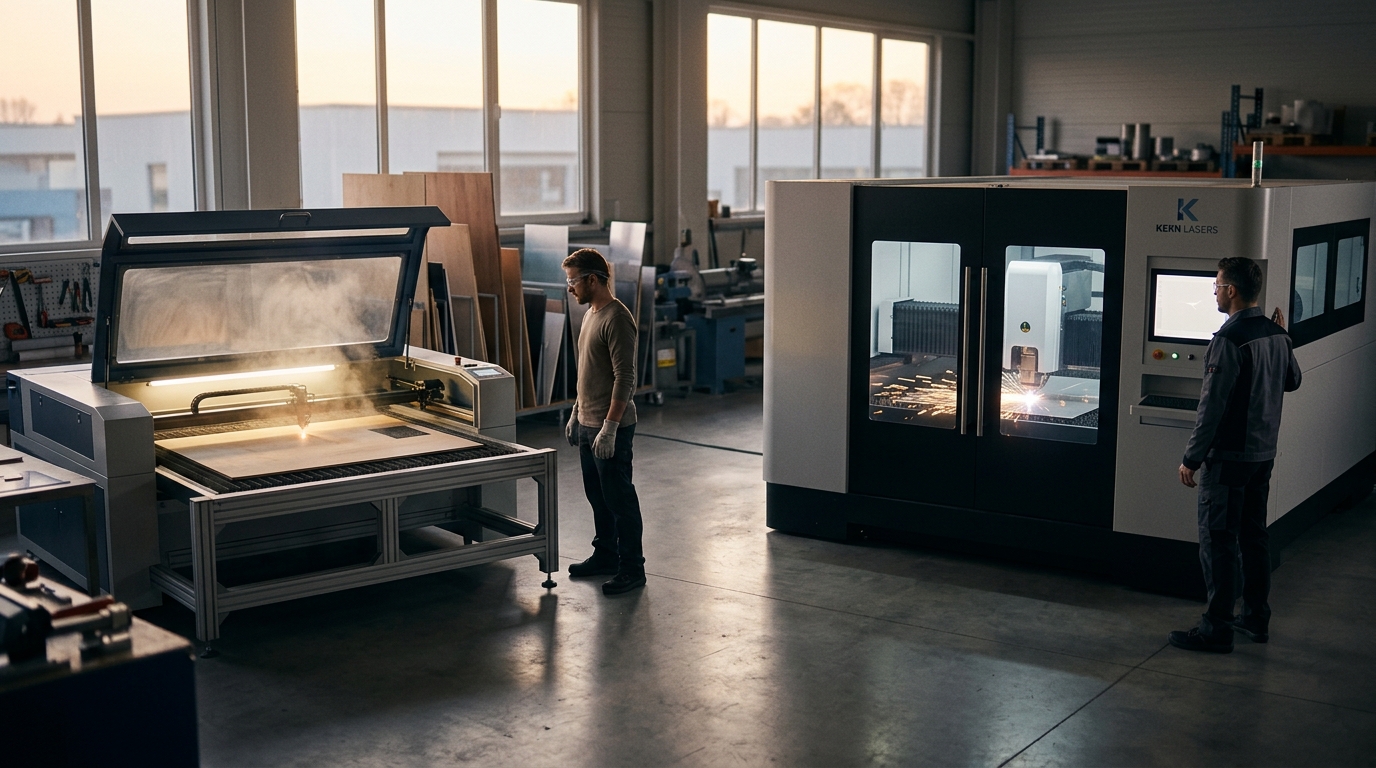
Choosing the correct laser cutting technology is one of the most critical capital expenditure decisions a manufacturing facility can make. The global laser cutting market is projected to grow at a compound annual growth rate of over 10% through 2030, driven by demand for precision and speed in industrial applications. According to recent industry reports, fiber laser adoption has surged by more than 40% in the last five years among metal fabricators. This shift highlights the importance of understanding the fundamental differences between CO2 and fiber systems before committing to a purchase.
Core Technology Differences
Understanding the physics behind each machine type is the first step in making an informed decision. The fundamental difference lies in the medium used to generate the laser beam.
CO2 lasers are gas-based systems. They use a mixture of carbon dioxide, nitrogen, and helium gases to produce a laser beam with a wavelength of 10.6 micrometers. This longer wavelength is highly absorbed by non-metals, making CO2 lasers exceptionally efficient at cutting organic materials. The beam is generated in a glass tube and requires mirrors to direct it to the workpiece.
Fiber lasers are solid-state systems. They use a fiber optic cable doped with rare-earth elements like erbium or ytterbium to generate light. The wavelength is typically 1.06 micrometers, which is ten times shorter than that of a CO2 laser. This shorter wavelength is absorbed much more efficiently by reflective metals, allowing for faster cutting speeds and higher electrical efficiency.
According to the American Laser Goods Association, the efficiency of converting electricity to laser light is significantly higher in fiber systems. While CO2 lasers typically operate at 10-15% efficiency, fiber lasers can reach up to 30-50% efficiency. This difference directly impacts your facility's energy consumption and operational overhead.
Material Compatibility and Efficiency
The primary factor in choosing between these two technologies is the material you intend to cut. Each system has distinct strengths and weaknesses based on the physical properties of the workpiece.
Non-Metal Applications
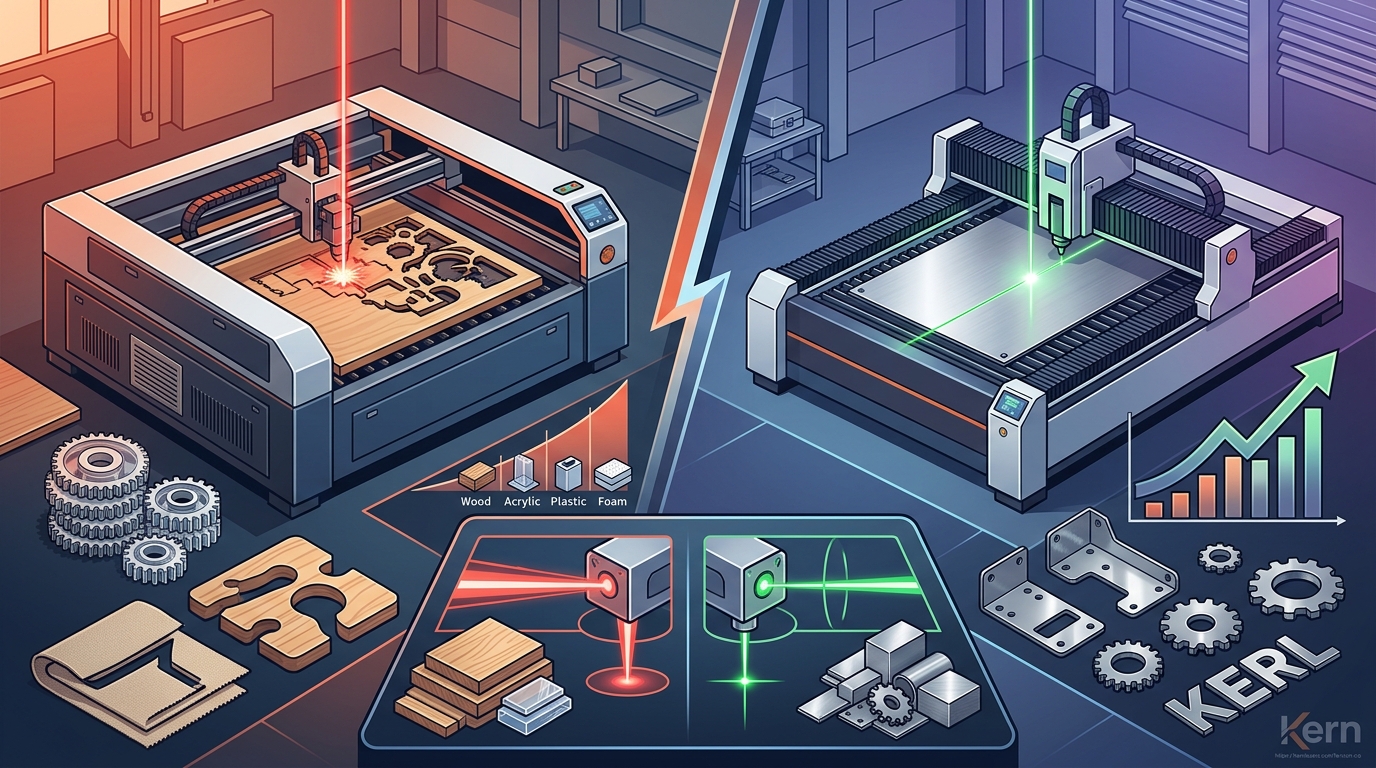
CO2 lasers remain the industry standard for cutting non-metallic materials. Wood, acrylic, leather, foam, and fabric are all cut with exceptional edge quality using CO2 technology. The 10.6-micrometer wavelength interacts with the molecular structure of these materials, causing rapid vaporization and clean cuts. Fiber lasers struggle with many of these materials because they reflect the shorter wavelength or fail to absorb enough energy to cut effectively.
If your business model relies heavily on signage, awards, or custom packaging, a CO2 system like the OptiFlex is likely the superior choice. These machines offer the versatility needed for diverse material handling.
Metal Cutting Capabilities
Fiber lasers have largely displaced CO2 lasers in the metal cutting sector. They excel at cutting reflective metals such as brass, copper, and gold, which are notoriously difficult for CO2 lasers to process. The high absorption rate of fiber lasers allows them to cut thin to medium-thickness metals at speeds up to three times faster than comparable CO2 systems.
For heavy-duty metal fabrication, systems like the FiberCell provide pure metal cutting capabilities with integrated safety enclosures. These systems are designed for high production environments where throughput is critical.
Operating Costs and Maintenance
Total cost of ownership (TCO) is a decisive factor for many manufacturers. While the initial purchase price of a fiber laser is often higher, the long-term operational savings can be substantial.
CO2 lasers require regular maintenance of gas tubes, mirrors, and lenses. The gas mixture degrades over time and must be refilled or replaced. Additionally, the optical components in the beam path are susceptible to contamination and require frequent cleaning. According to manufacturing efficiency studies, CO2 systems can incur up to 20% higher annual maintenance costs compared to fiber systems.
Fiber lasers are virtually maintenance-free regarding the light source. The fiber optic cable does not degrade in the same way as a gas tube, and there are no mirrors to align. This "set it and forget it" reliability reduces downtime and labor costs. The laser safety protocols for fiber systems are also streamlined due to the enclosed beam path, further reducing operational complexity.
Speed and Precision Analysis
Production speed is often the primary driver for switching to fiber technology. The higher electrical-to-optical efficiency of fiber lasers allows for greater power output in a smaller form factor. This results in faster cutting speeds, particularly on thin materials.
For example, cutting 1mm stainless steel with a 1kW fiber laser can be up to five times faster than with a 1kW CO2 laser. This speed advantage translates directly to higher throughput and lower cost per part. However, for thicker materials, the gap narrows, and CO2 lasers can still compete effectively due to their ability to maintain a consistent kerf width.
Precision is another key consideration. Both technologies offer high precision, but fiber lasers generally produce a narrower kerf and a smaller heat-affected zone. This is critical for intricate designs and tight tolerances. The KCAM Laser Software integrates with both systems to optimize cutting paths, but the inherent stability of the fiber beam often results in superior edge quality on metals.
Software and Workflow Integration
Modern laser cutting is not just about the hardware; it is about the workflow. Both CO2 and fiber systems require robust software for nesting, path optimization, and machine control.
Kern Laser Systems offers KCAM software, which is designed to maximize the efficiency of their machines. This software supports advanced features like automatic pierce height adjustment and material-specific cutting parameters. Integrating your laser system with your existing CAD/CAM workflow is essential for seamless production.
When evaluating machines, consider the ease of software integration. Does the system support standard file formats like DXF and DWG? Is the user interface intuitive for your operators? The technology stack of your laser system should complement your existing digital infrastructure.
Technology Comparison Summary
The following table summarizes the key differences between CO2 and fiber laser cutting systems to aid in your decision-making process.
| Feature | CO2 Laser Systems | Fiber Laser Systems |
|---|---|---|
| Primary Material | Non-metals (Wood, Acrylic, Leather) | Metals (Steel, Aluminum, Brass) |
| Wavelength | 10.6 micrometers | 1.06 micrometers |
| Energy Efficiency | 10-15% | 30-50% |
| Maintenance | High (Gas, Mirrors, Lenses) | Low (Minimal) |
| Cutting Speed (Metals) | Slower | Very Fast |
| Best For | Signage, Crafts, Engraving | Industrial Fabrication, Manufacturing |
Key Takeaways
- Material Dictates Technology: Use CO2 for non-metals and fiber for metals. This is the most critical rule in laser selection.
- Efficiency Gains: Fiber lasers offer 30-50% energy efficiency, significantly reducing utility costs compared to CO2 systems.
- Maintenance Costs: CO2 lasers require regular gas refills and optical alignment, while fiber systems are largely maintenance-free.
- Speed Advantage: Fiber lasers cut metals up to three times faster than CO2 lasers, increasing throughput.
- Brand Heritage: Kern Laser Systems has been manufacturing laser equipment since 1982, providing decades of reliability and support.
- Software Integration: Utilize KCAM software to optimize cutting paths and maximize machine performance.
- Warranty Support: Kern offers a 3-year warranty on CO2 laser systems, ensuring long-term peace of mind for your investment.
Frequently Asked Questions
Can a fiber laser cut wood?
Fiber lasers are not suitable for cutting wood. The 1.06-micrometer wavelength is reflected by organic materials rather than absorbed, resulting in poor cut quality and potential safety hazards. CO2 lasers are the standard for wood cutting.
Which laser is better for cutting acrylic?
CO2 lasers are superior for cutting acrylic. They produce a crystal-clear edge that often requires no polishing. Fiber lasers can melt or crack acrylic, leading to poor results.
How much does a fiber laser cost compared to a CO2 laser?
Fiber lasers typically have a higher initial purchase price than CO2 lasers. However, the lower operating costs and reduced maintenance can offset this difference over time. The total cost of ownership should be calculated over a five-year period.
Do I need a chiller for both systems?
Yes, both CO2 and fiber lasers require cooling systems to maintain optimal performance. However, fiber lasers generally require less cooling capacity due to their higher electrical efficiency and lower heat generation.
What is the lifespan of a CO2 laser tube?
A CO2 laser tube typically lasts between 10,000 and 20,000 hours, depending on usage and maintenance. Fiber laser diodes can last up to 100,000 hours, making them a more durable long-term investment.
Is fiber laser cutting safe?
Fiber laser cutting is safe when proper safety protocols are followed. Systems like the LaserCell include safety enclosures to protect operators from radiation and fumes. Always consult laser safety guidelines.
Can I engrave with a fiber laser?
Yes, fiber lasers are excellent for engraving metals and some plastics. They can create high-contrast marks on stainless steel, aluminum, and coated materials. CO2 lasers are better for engraving wood and glass.
Next Steps
Choosing the right laser cutting machine depends on your specific material needs, production volume, and budget. Whether you need the versatility of a CO2 system for non-metals or the speed of a fiber system for metals, Kern Laser Systems has the solution. Explore our range of large format laser cutting systems and fiber laser cutters to find the perfect fit for your business. Contact our team today to request a quote or schedule a demo.