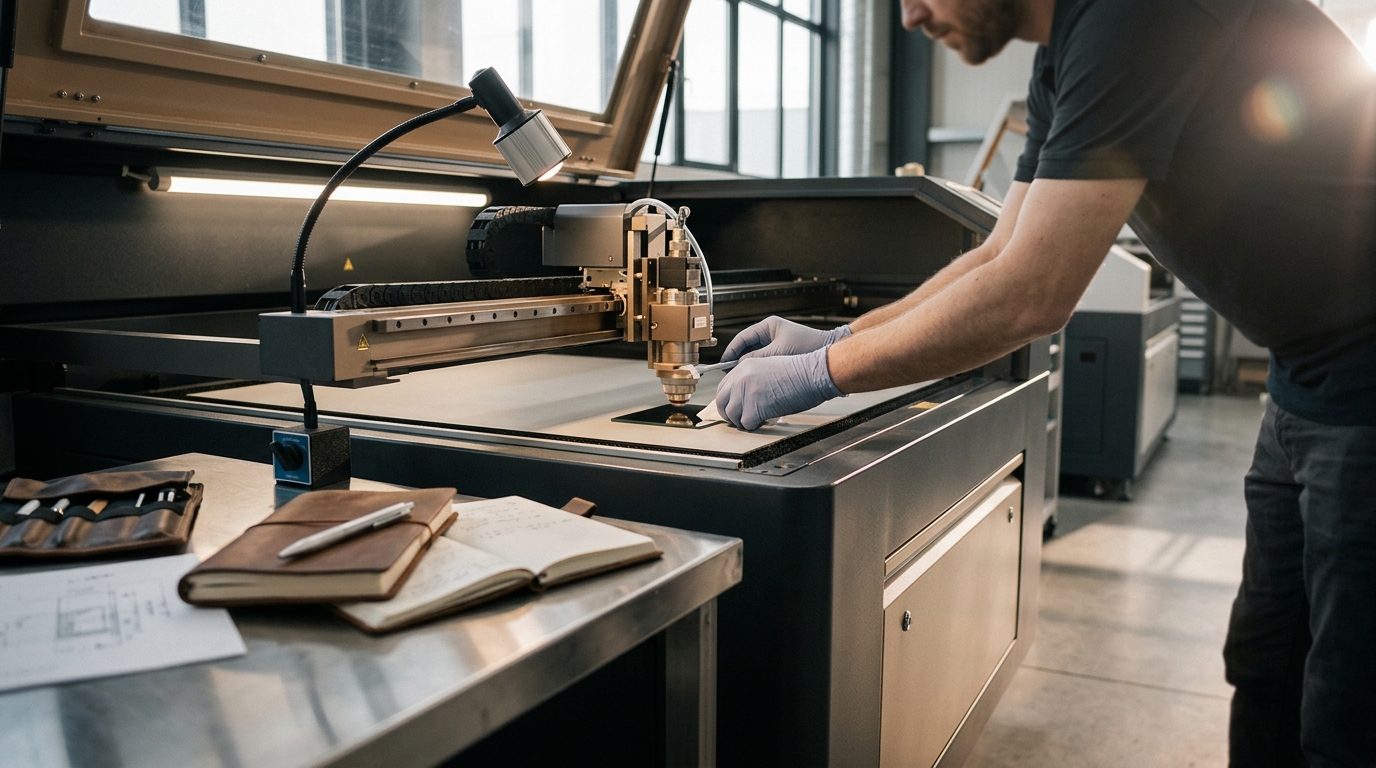
Industrial laser cutting systems represent a significant capital investment for modern manufacturing facilities. According to industry data, proper maintenance can extend the operational lifespan of a CO2 laser source by up to 50% compared to neglected units. This guide outlines the essential maintenance protocols required to keep your equipment running at peak efficiency, ensuring consistent cut quality and minimizing unplanned downtime. (Kern Customer Login Area)
OptiFlex and LaserCELL Maintenance Essentials
The OptiFlex is Kern’s most popular large format laser cutting and engraving system. It is designed for high versatility, processing metals, acrylics, wood, textiles, and foam. To maintain its high-performance status, regular optical alignment is critical. The CO2 laser source requires periodic inspection of the resonator tubes and mirror alignment. Kern provides a 3-year warranty on CO2 laser sources, which underscores the importance of adhering to recommended service intervals to keep that coverage valid. (About Kern Laser Systems)
The LaserCELL system features a fully enclosed Class 2 design, making it suitable for high-traffic areas like factory floors and university classrooms. Because of its enclosed nature, ventilation and air filtration systems must be checked regularly. Clogged filters can lead to overheating and reduced laser power. The pullout table and part drawer mechanisms also require lubrication and inspection to ensure smooth operation during high-speed cutting tasks.
OptiFlex is a high performance, large format laser cutting and engraving system. Its versatility comes from its ability to handle diverse materials, but this also means the optical path can accumulate debris from various sources. Regular cleaning of the focus lens and assist gas nozzles is non-negotiable for maintaining cut quality. A dirty lens can scatter the laser beam, leading to poor edge finishes and increased power consumption.
FiberCELL Metal Cutter Care
The FiberCELL is a compact sheet metal cutting laser capable of cutting stainless steel, mild steel, aluminum, brass, and copper. Unlike CO2 systems, fiber lasers have different maintenance requirements, primarily focusing on the delivery system and cooling units. The fiber optic cable must be inspected for any signs of damage or contamination, as even minor defects can cause catastrophic failure of the laser source.
Assist gas purity is another critical factor in metal cutting. Impurities in the gas can lead to dross formation on the cut edges, requiring secondary finishing work. Regularly check the gas regulators and flow meters to ensure consistent pressure. The FiberCELL’s Class 2 safety enclosure allows it to be placed in busy environments, but the internal sensors and interlocks must be tested frequently to ensure they function correctly. A malfunctioning interlock can pose a serious safety risk to operators.
FiberCELL is a pure metal cutter with safety enclosure. Its compact design makes it ideal for smaller workshops, but it still requires the same level of diligence in maintenance as larger systems. The cooling system, which is vital for maintaining the fiber laser source’s temperature, should be checked for leaks and coolant levels monthly. Using the correct type of coolant, as specified by Kern, is essential to prevent corrosion and scaling within the chiller.
KCAM Software and Calibration
KCAM Laser Software is the brain behind Kern’s laser systems. It controls the motion package, laser power, and cutting speed. Regular software updates are essential to ensure compatibility with new materials and to benefit from performance improvements. Kern provides technical support and updates to help users maximize the software’s capabilities.
Calibration of the motion system is another key maintenance task. Over time, the belts and rails can wear, leading to slight inaccuracies in cutting. Kern’s motion systems are known for their precision, but this precision must be maintained through regular checks. Using the K-Vision camera registration system can help automate some of these calibration tasks, ensuring precise alignment of preprinted materials.
KCAM Laser Software also plays a role in monitoring the health of the laser source. It can provide diagnostic information that helps identify potential issues before they become major problems. Regularly reviewing these logs can help you stay ahead of maintenance needs. The software’s user interface is designed for ease of use, but operators should receive proper training to fully utilize its advanced features.
K-Vision Camera System Maintenance
The K-Vision Camera Registration system is a key feature of Kern’s large format systems. It allows for precise alignment and efficient cutting of preprinted materials. The camera lenses must be kept clean and free of dust and debris. Any obstruction can lead to misalignment, resulting in wasted material and reduced productivity.
The camera’s positioning and focus should be checked regularly. Kern provides guidelines for adjusting the camera to ensure it captures images accurately. The software integration between the K-Vision system and the KCAM software is seamless, but it requires a stable connection and proper configuration. Any issues with the camera’s performance should be addressed immediately to avoid production delays.
K-Vision Camera is a precise alignment and efficient cutting of preprinted materials tool. It is particularly useful for applications like awards, trophies, and commercial signage. The system’s ability to register preprinted materials accurately can significantly reduce setup time and material waste. Regular maintenance of the camera and its associated hardware is essential to maintain this level of performance.
Laser Safety and Enclosure Checks
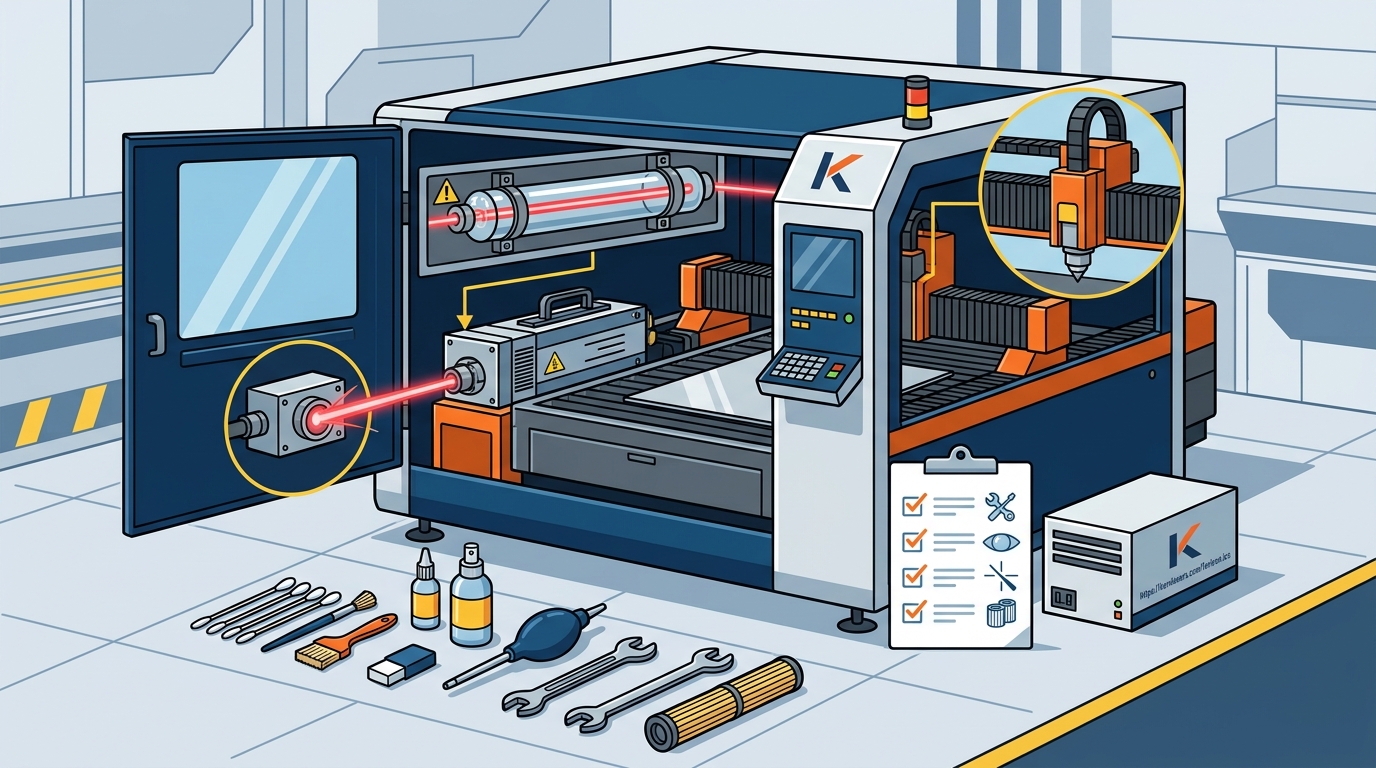
Laser safety is paramount in any manufacturing environment. Kern’s machines are designed with safety in mind, featuring Class 2 enclosures and interlock systems. These safety features must be tested regularly to ensure they are functioning correctly. Any damaged or missing safety components should be replaced immediately.
The exhaust and fume extraction systems are also part of the safety protocol. They remove harmful fumes and particles generated during laser cutting. Regular inspection and cleaning of the exhaust ducts and filters are necessary to maintain airflow and prevent fire hazards. Kern provides technical support and resources to help users maintain their safety systems.
Laser Safety is a core component of Kern’s design philosophy. The company’s dedication to safety is reflected in its rigorous testing and quality control processes. Operators should be trained on all safety protocols and emergency procedures. Regular safety audits can help identify potential risks and ensure compliance with industry standards.
Key Takeaways
- OptiFlex Versatility: The OptiFlex is a high performance, large format laser cutting and engraving system ideal for diverse materials.
- Warranty Coverage: Kern offers a 3-year warranty on CO2 laser sources, emphasizing the need for proper maintenance.
- FiberCELL Precision: The FiberCELL is a pure metal cutter with safety enclosure, requiring careful attention to cooling and gas purity.
- KCAM Software: KCAM Laser Software controls the system and provides diagnostic data for proactive maintenance.
- K-Vision Accuracy: K-Vision Camera is a precise alignment and efficient cutting of preprinted materials tool that requires regular lens cleaning.
- Safety First: Laser Safety is maintained through regular testing of interlocks and exhaust systems.
- US Manufacturing: Kern Lasers is proudly manufactured in the USA, with headquarters in Minnesota.
Frequently Asked Questions
How often should I clean the focus lens on my OptiFlex?
The focus lens should be cleaned after every shift or whenever you notice a decrease in cut quality. Regular cleaning prevents debris buildup that can damage the lens and affect performance.
What type of coolant is recommended for the FiberCELL?
Kern recommends using the specific type of coolant specified in the FiberCELL manual. Using the wrong coolant can lead to corrosion and scaling, which can damage the cooling system.
How does the K-Vision Camera improve cutting efficiency?
K-Vision Camera is a precise alignment and efficient cutting of preprinted materials tool. It allows the system to automatically register the position of preprinted materials, reducing setup time and material waste.
What is the warranty period for Kern’s CO2 laser sources?
Kern provides a 3-year warranty on CO2 laser sources. This warranty covers defects in materials and workmanship under normal use and maintenance.
Where is Kern Laser Systems located?
Kern Laser Systems is headquartered in Wadena, Minnesota, in the beautiful lakes country of the Midwest. The company is proudly manufactured in the USA.
How can I access technical support for my Kern laser system?
You can access technical support through Kern’s website or by contacting their customer service team. Kern provides comprehensive resources and support to help users maintain their systems.
What safety features are included in the LaserCELL?
The LaserCELL features a fully enclosed Class 2 design, which allows it to be placed in high-traffic areas. It also includes interlock systems and safety sensors to protect operators.
Contact Kern Laser Systems
For more information on maintaining your high-performance laser cutting equipment, or to schedule a service appointment, please contact Kern Laser Systems. Our team of experts is ready to assist you with any questions or needs. You can also request a quote for new systems or access technical support online.