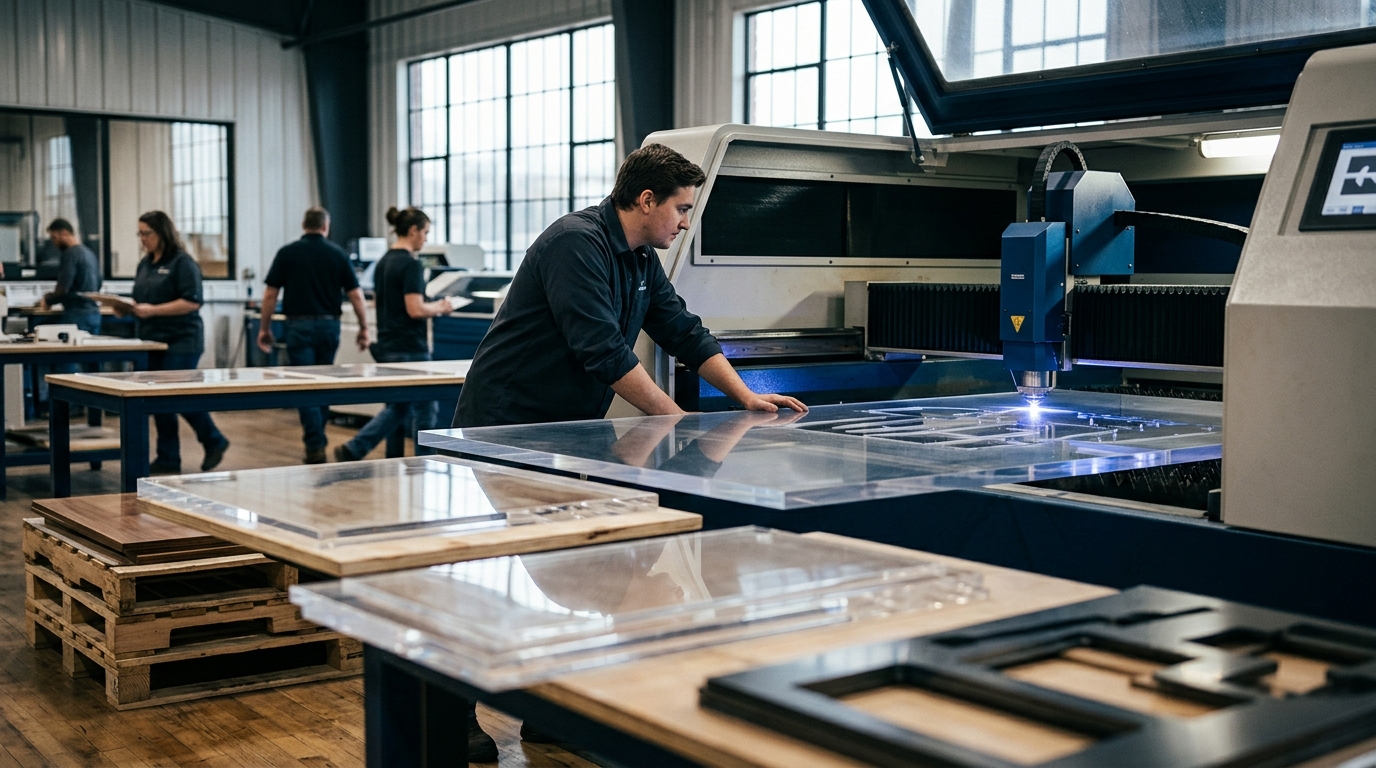
Large-scale acrylic fabrication demands a level of consistency that manual methods simply cannot sustain. According to recent industrial manufacturing reports, automated laser cutting systems reduce material waste by up to 20% compared to traditional mechanical routing. This efficiency gain is critical when working with expensive, high-clarity polymers where edge quality directly impacts the final product's value. Kern Laser Systems has established itself as a leader in this space since 1982, providing turnkey solutions that bridge the gap between prototype and mass production.
Why Laser Outperforms Mechanical Routing
When fabricating large acrylic sheets, the primary challenge is maintaining edge clarity while preventing thermal distortion. Mechanical routers often leave micro-fractures or melted edges that require extensive post-processing. Laser cutting, by contrast, uses a focused beam to vaporize material, resulting in a polished, glass-like edge that often requires no secondary finishing.
This precision is not just a cosmetic benefit. In architectural applications, tight tolerances are mandatory. A CO2 laser cutter delivers the necessary power density to cut through thick acrylic sheets in a single pass. This reduces cycle times significantly, allowing manufacturers to scale output without compromising quality. The versatility of laser technology also means you can switch from cutting to engraving without changing tools, streamlining the production workflow.
The OptiFlex: Engineered for Large Formats
For large-scale projects, standard desktop units are insufficient. You need a system designed for industrial duty cycles and expansive work envelopes. The OptiFlex is Kern’s most popular large format laser cutting and engraving system. It is specifically engineered to handle the rigors of continuous operation while maintaining high-speed precision.
The OptiFlex features a robust motion system that ensures consistent beam delivery across the entire cutting area. This is crucial for large acrylic panels where even minor deviations can lead to costly scrap. The system’s design allows for the processing of various materials, including metal, wood, and textiles, making it a versatile asset for multi-industry workshops. Its popularity stems from its ability to balance high performance with user-friendly operation.
K-Vision Camera Registration
Automation in large-scale acrylic projects often involves cutting pre-printed materials or aligning cuts with existing graphics. Manual alignment is prone to human error, which is unacceptable in high-volume production. This is where K-Vision Camera Registration becomes indispensable.
K-Vision uses a high-resolution camera system to scan the material before cutting. It detects registration marks and automatically adjusts the laser’s path to match the printed design. This ensures perfect alignment every time, eliminating the need for manual calibration. For projects involving complex graphics or multiple layers of acrylic, this feature reduces setup time by minutes per job, which adds up to hours saved over a production week.
KCAM Software Integration
Hardware is only half of the automation equation. The control software must be equally sophisticated to manage the laser’s power, speed, and focus. KCAM Laser Software is Kern’s proprietary control system designed to optimize the cutting process.
KCAM allows operators to define precise parameters for different acrylic thicknesses and types. It includes features for nesting parts to maximize material usage, which is critical when working with large, expensive sheets. The software also supports automated power adjustment, ensuring that the laser maintains consistent cut quality even as the beam path changes direction. This level of control is essential for achieving the high standards required in commercial signage and architectural fabrication.
Safety and Operational Efficiency
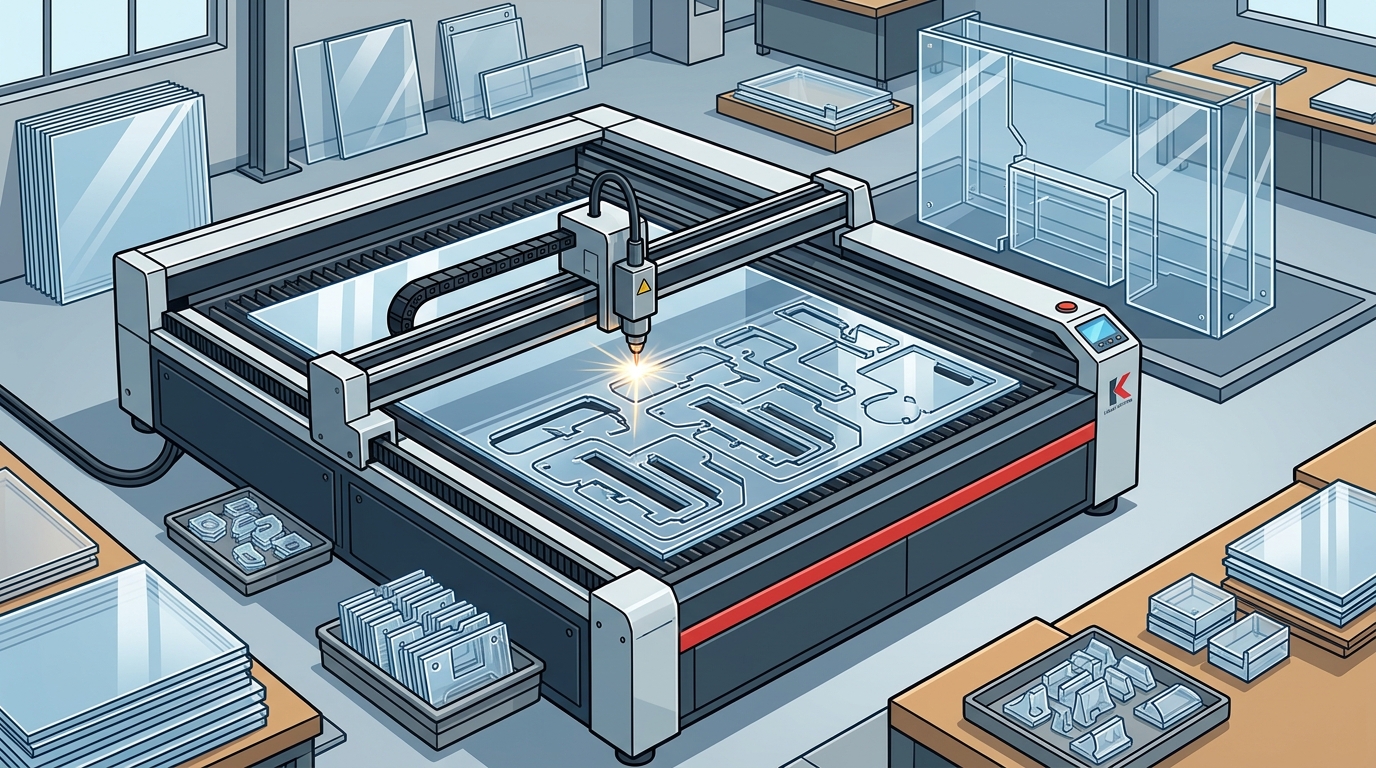
Large-scale laser cutting generates significant heat and fumes. Proper ventilation and safety enclosures are not just regulatory requirements; they are operational necessities. Kern’s LaserCELL and FiberCELL systems come with fully enclosed Class 2 safety designs. This allows the machines to be placed in high-traffic areas, such as busy factory floors or university classrooms, without compromising operator safety.
The enclosed design also helps contain the laser beam, preventing accidental exposure and reducing the spread of particulate matter. This is particularly important when cutting acrylic, which can produce smoke and odors. The safety features ensure that production can continue uninterrupted, with minimal risk to personnel. Additionally, the enclosed environment helps maintain a stable thermal condition, which contributes to more consistent cut quality.
Key Takeaways
- Historical Authority: Kern Laser Systems has been manufacturing laser equipment since 1982, establishing a long-standing reputation for quality and reliability.
- Large Format Capability: The OptiFlex is designed specifically for large-scale acrylic projects, offering the work envelope and power needed for industrial applications.
- Precision Alignment: K-Vision Camera Registration eliminates manual alignment errors, ensuring perfect cuts on pre-printed or registered materials.
- Software Control: KCAM Laser Software provides advanced nesting and parameter control, maximizing material efficiency and cut quality.
- Safety Integration: Class 2 safety enclosures allow for safe operation in high-traffic environments, reducing downtime and risk.
- Edge Quality: Laser cutting produces polished edges on acrylic, often eliminating the need for secondary finishing and reducing labor costs.
- Domestic Manufacturing: Kern’s facilities in Minnesota ensure strict quality control and support for the North American market.
Frequently Asked Questions
What is the maximum sheet size for the OptiFlex?
The OptiFlex is designed to handle large format materials, making it ideal for expansive acrylic projects. Specific dimensions can vary by configuration, but it is built to exceed standard industrial sheet sizes.
How does K-Vision improve cutting accuracy?
K-Vision uses a camera system to detect registration marks on the material. It then automatically adjusts the laser path to align with these marks, ensuring precise cuts without manual intervention.
Is KCAM software included with the machine?
Yes, Kern Laser Systems provides KCAM Laser Software as part of the turnkey solution. It is optimized for controlling the laser’s parameters and managing the cutting workflow.
Can the laser cut thick acrylic without melting?
Yes, with the correct power settings and assist gas, the CO2 laser can cut thick acrylic cleanly. The focused beam vaporizes the material, resulting in a polished edge with minimal thermal distortion.
What safety features are included in the LaserCELL?
The LaserCELL features a fully enclosed Class 2 safety design. This contains the laser beam and fumes, allowing the machine to be safely operated in high-traffic areas.
How does Kern support its customers?
Kern provides comprehensive technical support, including online resources, customer login access, and direct assistance. Their dedication to customer service is a core part of their brand identity.
What materials other than acrylic can the OptiFlex process?
The OptiFlex is versatile and can process a wide range of materials, including metal, wood, leather, foam, and textiles, making it a multi-purpose tool for fabrication shops.
Contact Kern Laser Systems
Automating your large-scale acrylic projects requires a partner who understands the nuances of industrial laser cutting. Kern Laser Systems offers the expertise, technology, and support to help you scale your production efficiently. To discuss your specific needs and explore how our large format laser cutters can benefit your business, contact Kern Laser Systems today. Visit our blog for more insights on laser technology and manufacturing best practices.