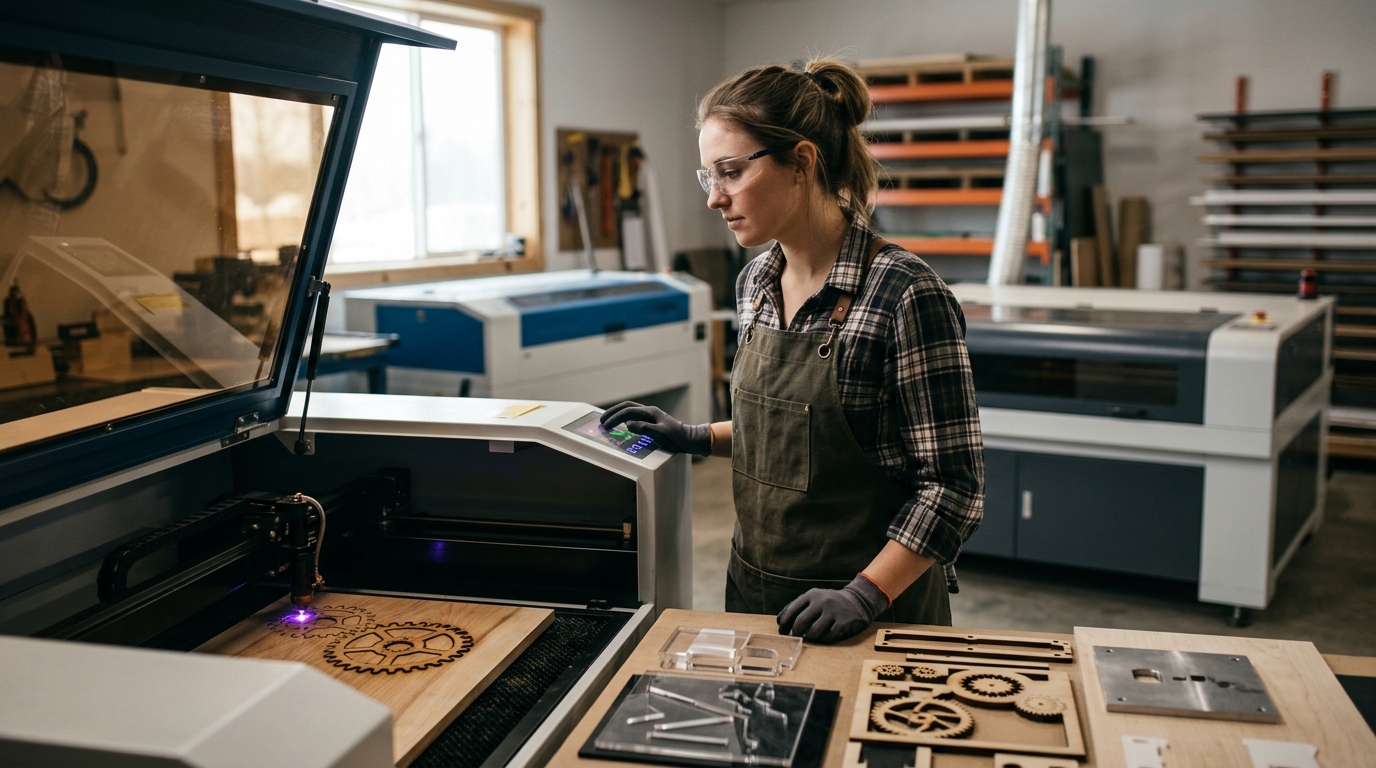
Entering the manufacturing sector with laser cutting technology requires a strategic approach to equipment selection. According to recent industry data, the global laser cutting market is projected to grow at a compound annual growth rate of over 10% through 2030, driven by demand for precision in automotive and aerospace components. For beginners, the initial investment can be daunting, but understanding the core differences between fiber, CO2, and diode systems is critical. This guide breaks down the essential machinery, operational costs, and safety protocols necessary to launch a successful small-scale manufacturing operation.
Understanding Laser Types
Before purchasing equipment, you must understand the fundamental physics of the laser source. The three primary categories are fiber, CO2, and diode lasers. Each has distinct advantages and limitations regarding material compatibility and cutting depth.
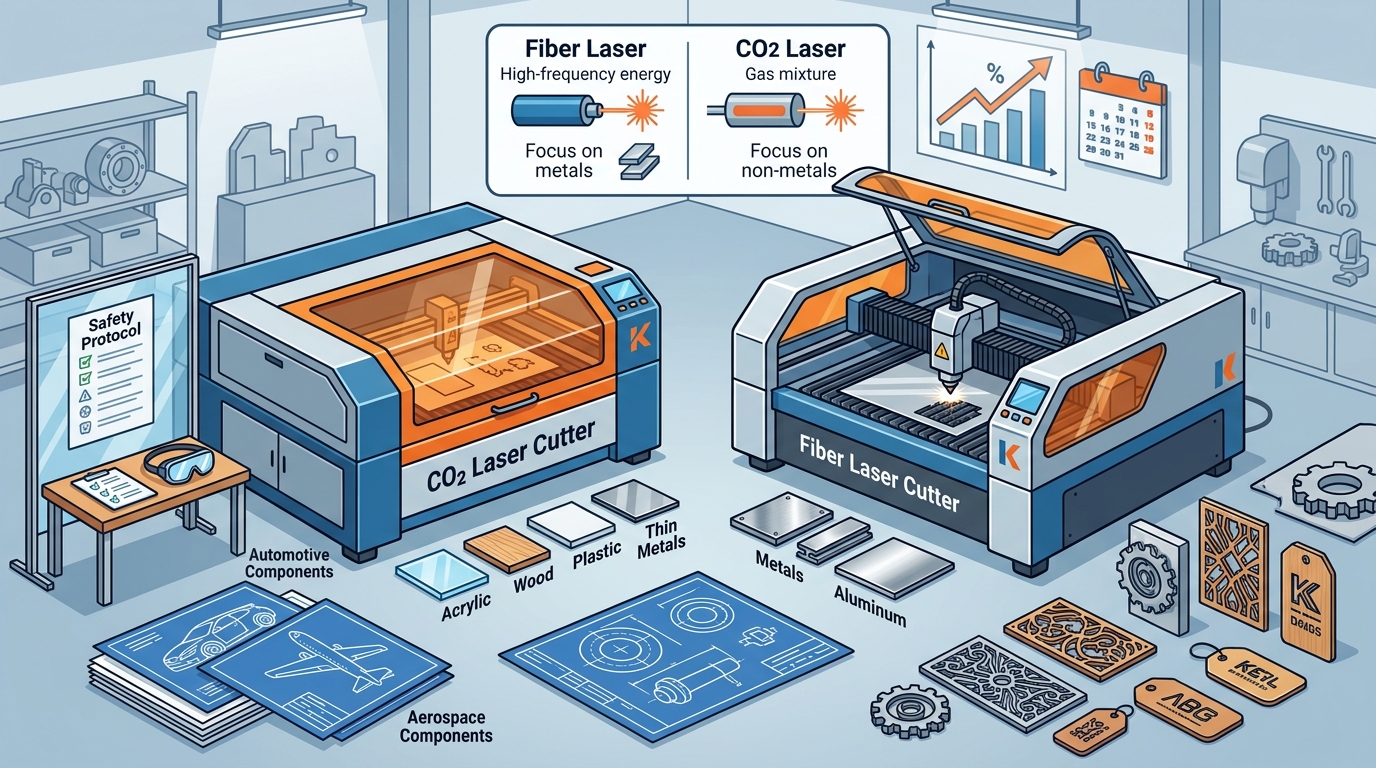
Fiber lasers use a solid-state gain medium doped with rare-earth elements. They are highly efficient and ideal for metals. CO2 lasers use a gas mixture to generate infrared radiation, making them superior for non-metals like wood and acrylic. Diode lasers are compact and cost-effective, often used for engraving and light cutting in hobbyist and entry-level professional settings.
For beginners in manufacturing, the choice often hinges on the primary material you intend to process. If your focus is metal fabrication, a fiber laser is the industry standard. If you are working with composites, wood, or plastics, a CO2 system offers better precision and surface finish.
Fiber vs. CO2 Systems
The debate between fiber and CO2 lasers is central to any beginner's research. Fiber lasers have gained dominance in metal cutting due to their high electrical efficiency and low maintenance requirements. They do not require gas lasers or mirrors that degrade over time, leading to lower operational costs.
Conversely, CO2 lasers remain the gold standard for non-metallic materials. They provide a smoother cut edge on acrylics and woods, which fiber lasers often struggle to achieve without additional assist gases. According to manufacturing efficiency reports, fiber lasers can cut steel up to three times faster than CO2 lasers of equivalent power.
When evaluating your needs, consider the thickness of the materials. Fiber lasers excel in thin to medium gauge metals. CO2 lasers are versatile across a wider range of non-metal thicknesses but are less effective on reflective metals like copper and brass.
Key Specifications to Evaluate
Several technical specifications dictate the performance and suitability of a laser cutting machine for beginners. Understanding these metrics will prevent costly purchasing errors.
Laser Power: Measured in watts, power determines the maximum thickness you can cut. For beginners, a range of 500W to 2000W for fiber lasers is often sufficient for sheet metal work. For CO2, 80W to 150W is typical for small business applications.
Work Area: The size of the bed determines the maximum sheet size you can process. Standard beginner machines often feature a 1325mm x 2500mm bed, which accommodates standard 4x8 foot sheets.
Positioning Accuracy: This refers to the machine's ability to return to a specific coordinate. High-precision machines offer repeatability within 0.03mm, which is crucial for consistent manufacturing quality.
Cooling System: Lasers generate significant heat. A chiller is essential to maintain stable operation. Air-cooled systems are common for lower power units, while water chillers are required for high-power fiber lasers.
Safety Protocols
Laser cutting involves high-energy beams and hazardous materials. Safety is not optional; it is a regulatory requirement. Beginners must adhere to strict safety guidelines to protect themselves and their employees.
Enclosure: All laser cutting machines must have a fully enclosed housing to contain the beam and prevent accidental exposure. The enclosure should have interlocks that shut off the laser if opened.
Extraction Systems: Cutting materials releases toxic fumes and particulates. A high-capacity fume extractor is mandatory to maintain air quality and comply with OSHA standards. According to environmental safety data, improper ventilation can lead to severe respiratory issues for operators.
Protective Eyewear: Specific wavelength eyewear must be worn when the enclosure is open for maintenance. Never look directly at the laser beam, even through protective glass.
Top Beginner Machines
Selecting the right machine depends on your budget and material focus. Below is a comparison of common categories suitable for beginners.
| Machine Type | Best For | Power Range | Estimated Cost | Pros |
|---|---|---|---|---|
| Fiber Laser Cutter | Metals (Steel, Aluminum) | 500W - 3000W | $15,000 - $50,000 | High speed, low maintenance |
| CO2 Laser Cutter | Wood, Acrylic, Plastics | 80W - 150W | $5,000 - $15,000 | Smooth edges, versatile materials |
| Diode Laser Engraver | Hobbyist, Light Cutting | 5W - 40W | $500 - $2,000 | Compact, affordable, easy to use |
| Galvo Laser Marker | Engraving, Marking | 20W - 100W | $3,000 - $10,000 | High speed, small area |
For serious manufacturing beginners, a used fiber laser can offer significant value. However, new machines provide warranties and the latest technology. Kern Laser offers a range of high-quality laser solutions tailored for industrial and commercial applications.
Operational Costs
Beyond the initial purchase price, operational costs must be factored into your business plan. These include electricity, assist gases, consumables, and maintenance.
Electricity: Fiber lasers are significantly more energy-efficient than CO2 lasers. A 1000W fiber laser may consume less power than a 100W CO2 laser due to the efficiency of the diode pump source.
Assist Gases: Cutting metals often requires nitrogen or oxygen. Nitrogen is expensive but produces a clean, oxide-free cut. Oxygen is cheaper but can leave a rougher edge. According to industry benchmarks, gas costs can account for 20% of total operational expenses.
Maintenance: Fiber lasers have fewer moving parts and no gas tubes to replace, reducing maintenance costs. CO2 lasers require regular mirror cleaning and tube replacements every 1-2 years.
Key Takeaways
- Fiber lasers are the standard for metal cutting due to their speed and efficiency.
- CO2 lasers are superior for non-metallic materials like wood and acrylic.
- Safety enclosures and fume extraction are mandatory for compliance and health.
- Operational costs include electricity, gases, and maintenance, with gas being a major variable.
- Beginners should start with a machine that matches their primary material focus.
- Used equipment can be a cost-effective option if inspected thoroughly.
- Proper training is essential for safe and efficient machine operation.
Frequently Asked Questions
What is the best laser cutter for a small business?
A 1000W to 1500W fiber laser cutter is ideal for small businesses focusing on metal fabrication. It offers a balance of power, speed, and cost-effectiveness.
How much does a beginner laser cutting machine cost?
Entry-level diode lasers cost between $500 and $2,000. Industrial fiber lasers start around $15,000. CO2 lasers for small businesses typically range from $5,000 to $15,000.
Can I cut metal with a CO2 laser?
CO2 lasers are not efficient for cutting metals. They are primarily used for non-metals. For metal cutting, a fiber laser is required.
What safety gear is required for laser cutting?
You need wavelength-specific protective eyewear, a fully enclosed machine, and a fume extraction system. Regular safety training is also essential.
How do I choose between fiber and CO2 lasers?
Choose fiber for metals and CO2 for non-metals. If you need to cut both, you may need two separate machines or a hybrid system.
What is the maintenance requirement for fiber lasers?
Fiber lasers have low maintenance requirements. They do not require gas tube replacements. Regular cleaning of lenses and mirrors is sufficient.
Is laser cutting safe for beginners?
With proper training and safety protocols, laser cutting is safe. Beginners should always follow manufacturer guidelines and wear appropriate protective gear.
What materials can be cut with a diode laser?
Diode lasers can cut wood, acrylic, leather, and paper. They are not suitable for metals or thick materials.
Start Your Manufacturing Journey
Choosing the right laser cutting machine is a critical step in your manufacturing career. Whether you are starting with a diode engraver or investing in a high-power fiber system, the right equipment will drive your success. Kern Laser provides expert guidance and high-quality machinery to help you achieve your production goals. Contact our team today to discuss your specific needs and explore our contact page for a personalized consultation.