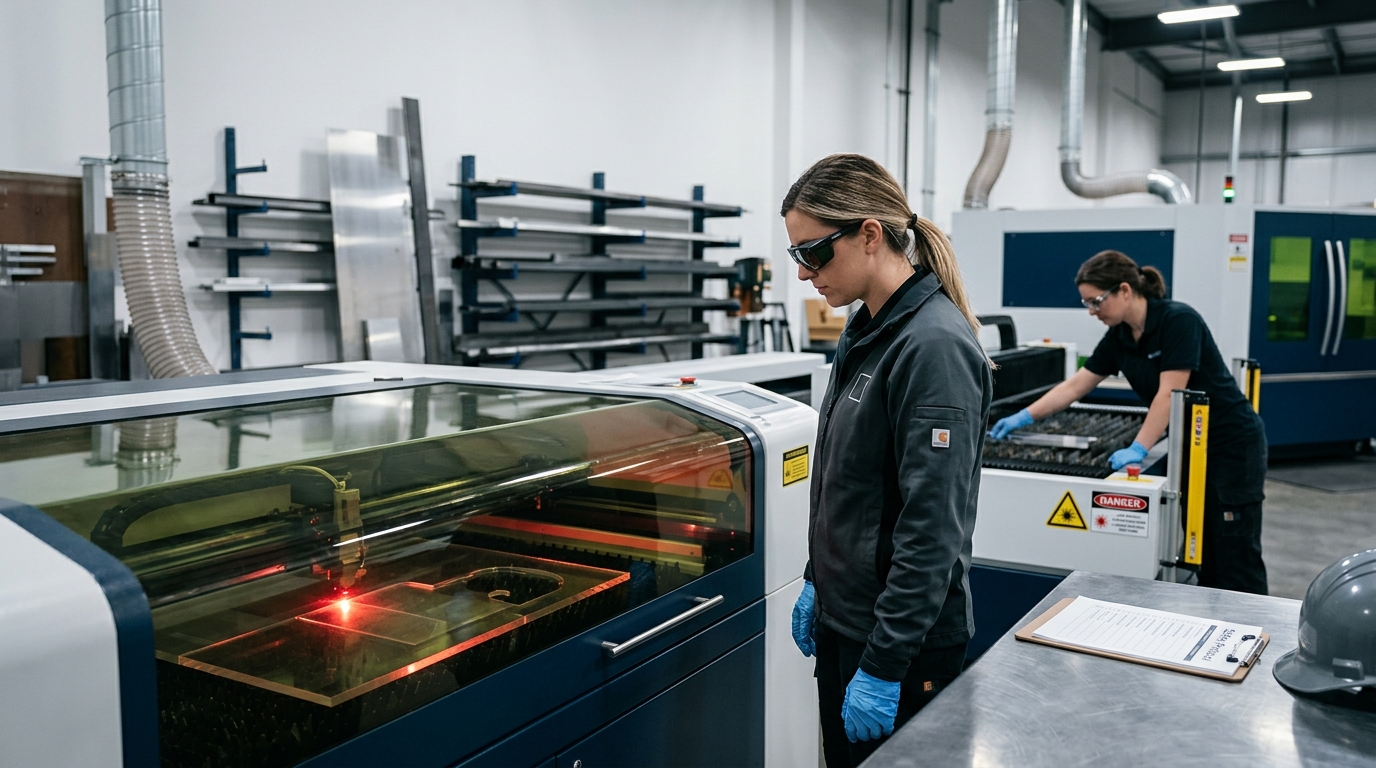
Industrial laser systems have become the backbone of modern manufacturing, enabling precision cutting, welding, and marking at scales previously unimaginable. However, the power required to cut through steel or engrave ceramics introduces significant hazards that demand rigorous safety protocols. According to the Occupational Safety and Health Administration (OSHA), laser-related injuries in industrial settings remain a critical concern, with proper safety measures reducing risk by over 90% when strictly enforced. This guide outlines the mandatory safety frameworks, personal protective equipment (PPE) requirements, and operational best practices necessary to maintain a secure working environment while maximizing the efficiency of your laser infrastructure.
Understanding Laser Classifications and Hazards
Before implementing any safety protocol, operators must understand the specific hazard level of their equipment. The American National Standards Institute (ANSI) Z136.1 standard classifies lasers into four primary categories based on their potential to cause injury.
Class 3B and Class 4 lasers are the most common in industrial applications. Class 3B lasers can cause immediate eye damage upon direct exposure, while Class 4 lasers pose even greater risks, including skin burns, fire hazards, and diffuse reflection injuries. These high-power systems require the most stringent controls because they can emit beams with enough energy to ignite materials or cause permanent retinal damage from scattered light. (About)
Understanding these classifications is not merely a regulatory checkbox. It dictates the level of engineering controls, the type of PPE required, and the extent of administrative oversight needed. For instance, a Class 4 laser system used for heavy-duty cutting requires full interlocked enclosures, whereas a lower-power marking system might only require protective eyewear and restricted access zones. Kern Lasers designs its industrial systems with these classifications in mind, ensuring that each unit meets or exceeds ANSI standards for its specific power output and application.
Personal Protective Equipment (PPE) Requirements
Personal Protective Equipment serves as the final line of defense between the operator and the laser beam. However, PPE must be selected with extreme precision. Standard sunglasses or generic safety glasses are completely ineffective against industrial laser wavelengths.
Selecting the Correct Optical Density (OD)
The effectiveness of laser safety glasses is measured by their Optical Density (OD). A higher OD rating indicates greater protection. For example, an OD of 6+ at a specific wavelength means the glasses reduce the laser intensity by a factor of one million. Operators must ensure their eyewear is rated for the exact wavelength of the laser system in use, whether it is a fiber laser at 1070 nm or a CO2 laser at 10,600 nm.
Additional PPE Considerations
Beyond eye protection, operators working with Class 4 lasers should wear flame-resistant clothing to mitigate burn risks from sparks or molten metal splatter. Face shields with appropriate OD ratings may be necessary for tasks involving high-risk exposure, such as maintenance or alignment procedures. Kern Lasers provides detailed PPE specifications for each of its industrial laser models, ensuring that operators have the correct gear for their specific machine configuration.
Engineering Controls and Enclosures
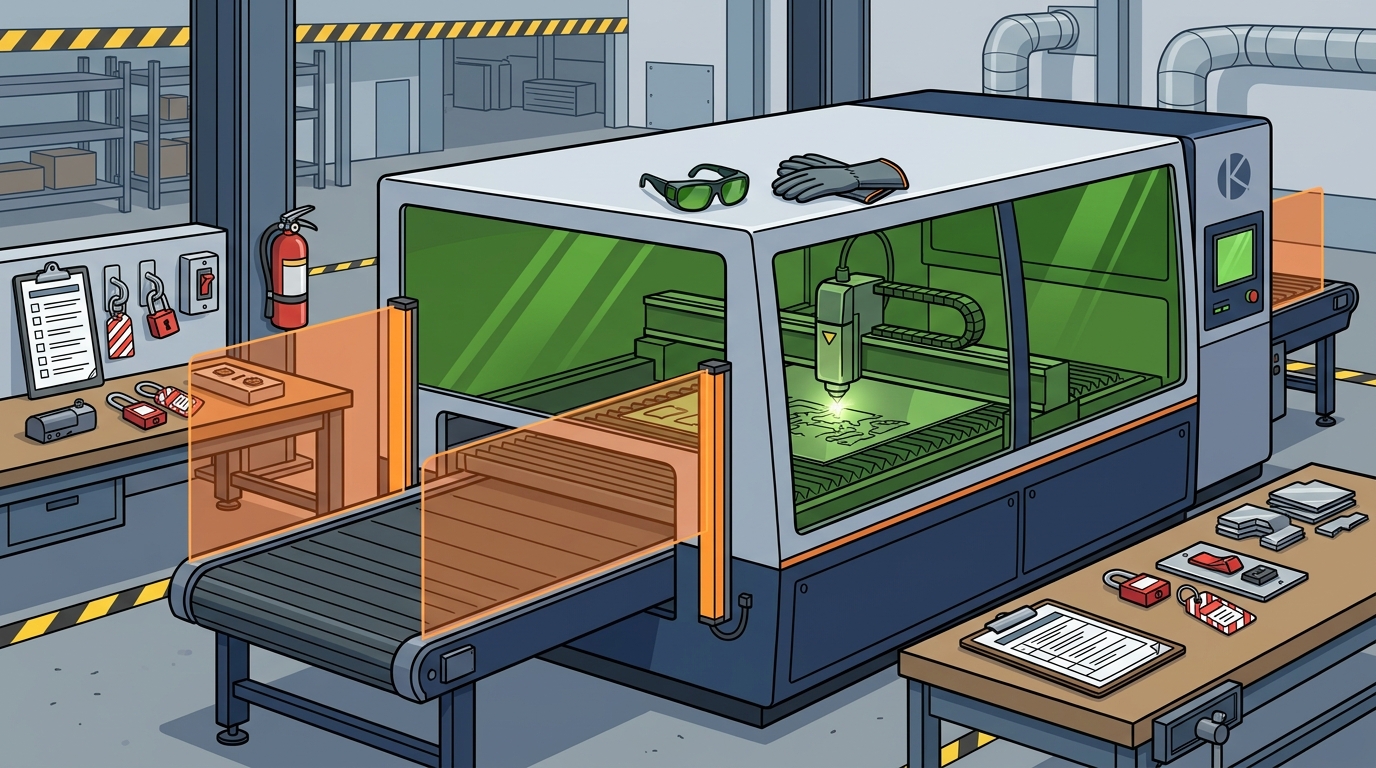
Engineering controls are the most effective way to manage laser hazards because they remove the hazard from the operator's environment. These controls are built into the machine design and do not rely on human behavior for effectiveness.
Interlocked Enclosures
All Class 4 laser systems must be housed in interlocked enclosures. These enclosures prevent the laser from emitting when the access doors are open. If a door is opened during operation, the system must immediately shut down the laser source. This feature is critical for preventing accidental exposure during material loading or unloading. Kern Lasers integrates advanced interlock systems into its industrial laser platforms, ensuring rapid shutdown and continuous monitoring of enclosure integrity.
Beam Path Containment
The beam path must be fully enclosed or shielded to prevent stray reflections. Mirrors and lenses should be housed in protective casings that direct the beam only where intended. Ventilation systems are also a crucial engineering control, removing fumes and particulates generated during cutting or welding processes. Proper ventilation not only protects operator health but also maintains the optical clarity of the laser system, ensuring consistent performance.
Administrative Controls and Training
Even with robust engineering controls, administrative controls are essential for maintaining a safe workplace. These controls include policies, procedures, and training programs that govern how the laser equipment is used.
Laser Safety Officer (LSO)
Facilities operating Class 3B and Class 4 lasers must designate a Laser Safety Officer (LSO). The LSO is responsible for overseeing the laser safety program, conducting regular inspections, and ensuring compliance with ANSI Z136.1 standards. The LSO also manages the laser hazard analysis and updates safety protocols as new equipment or processes are introduced.
Operator Training Programs
Comprehensive training is mandatory for all personnel who operate or maintain laser equipment. Training should cover laser classifications, PPE usage, emergency procedures, and routine maintenance. Operators must understand the specific hazards of their machine and know how to respond to malfunctions or accidents. Kern Lasers offers extensive training resources and support to help facilities establish robust safety cultures, ensuring that every operator is confident and competent in their role.
Emergency Procedures and Maintenance
Despite best efforts, emergencies can occur. Having clear, practiced emergency procedures is vital for minimizing harm. This includes knowing how to shut down the laser system quickly, where to find emergency stop buttons, and how to administer first aid for laser injuries.
Regular Maintenance and Inspection
Regular maintenance is not just about keeping the machine running; it is a safety imperative. Operators must inspect interlocks, enclosures, and ventilation systems regularly. Any damage to safety features must be addressed immediately before resuming operation. Kern Lasers provides detailed maintenance schedules and technical support to help facilities keep their systems in optimal condition, reducing the risk of unexpected failures that could compromise safety.
Incident Reporting
Any laser-related incident, no matter how minor, must be reported and investigated. This helps identify root causes and prevent future occurrences. Incident reports should include details about the equipment, the procedure being performed, the nature of the exposure, and the outcome. This data is invaluable for improving safety protocols and ensuring continuous improvement in workplace safety.
Key Takeaways
- Class 4 Classification: Most industrial lasers fall into Class 4, requiring the highest level of safety controls due to risks of eye damage, skin burns, and fire.
- PPE Precision: Laser safety glasses must be rated for the specific wavelength and power density of the laser system; generic eyewear offers no protection.
- Interlocked Enclosures: Mandatory for Class 4 systems, these enclosures automatically shut down the laser when access doors are opened, preventing accidental exposure.
- Laser Safety Officer: A designated LSO is required to oversee compliance with ANSI Z136.1 standards and manage the facility's laser safety program.
- Training Imperative: Comprehensive operator training covers hazard recognition, PPE usage, and emergency response, forming the backbone of a safe operational culture.
- Maintenance as Safety: Regular inspection of interlocks, ventilation, and optical components is critical to preventing safety failures and ensuring consistent machine performance.
- Incident Reporting: All laser-related incidents must be documented and analyzed to identify root causes and improve future safety protocols.
Frequently Asked Questions
What is the difference between Class 3B and Class 4 lasers?
Class 3B lasers can cause immediate eye injury from direct beam exposure but generally do not pose a fire hazard. Class 4 lasers have higher power outputs that can cause eye and skin injuries, ignite materials, and create hazardous diffuse reflections, requiring more stringent safety controls.
How often should laser safety glasses be replaced?
Laser safety glasses should be inspected regularly for scratches or damage that could compromise their Optical Density (OD). If the glasses are cracked, deeply scratched, or no longer fit properly, they must be replaced immediately to ensure adequate protection.
Who is responsible for laser safety in a facility?
The employer is ultimately responsible for providing a safe workplace, but this responsibility is typically delegated to a designated Laser Safety Officer (LSO). The LSO oversees the laser safety program, conducts inspections, and ensures compliance with ANSI Z136.1 standards.
Can I operate a Class 4 laser without an enclosure?
No. Class 4 lasers must be operated within an interlocked enclosure or with other engineering controls that prevent access to the beam. Open-beam operation of Class 4 lasers is only permitted in highly controlled environments with strict administrative and PPE measures in place.
What are the primary hazards of industrial lasers?
The primary hazards include eye damage (retinal burns), skin burns, fire risks from igniting materials, and hazardous fumes or particulates generated during processing. Proper ventilation and PPE are essential to mitigate these risks.
How does Kern Lasers support safety compliance?
Kern Lasers designs its industrial laser systems with built-in safety features, including interlocked enclosures and advanced monitoring systems. Additionally, we provide comprehensive training resources and technical support to help facilities establish and maintain robust laser safety programs.
What should I do in case of a laser exposure incident?
Immediately shut down the laser system if safe to do so. Seek medical attention for any eye or skin injuries. Report the incident to the Laser Safety Officer and document the details for investigation and future protocol improvements.
Secure Your Operations with Kern Lasers
Implementing robust safety protocols is not just a regulatory requirement; it is a fundamental aspect of operational excellence. By prioritizing safety, you protect your workforce, ensure compliance, and maximize the efficiency of your laser infrastructure. Kern Lasers is committed to providing high-performance industrial laser solutions that meet the highest safety standards. Contact us today to learn more about our laser systems and how we can help you build a safer, more productive manufacturing environment.