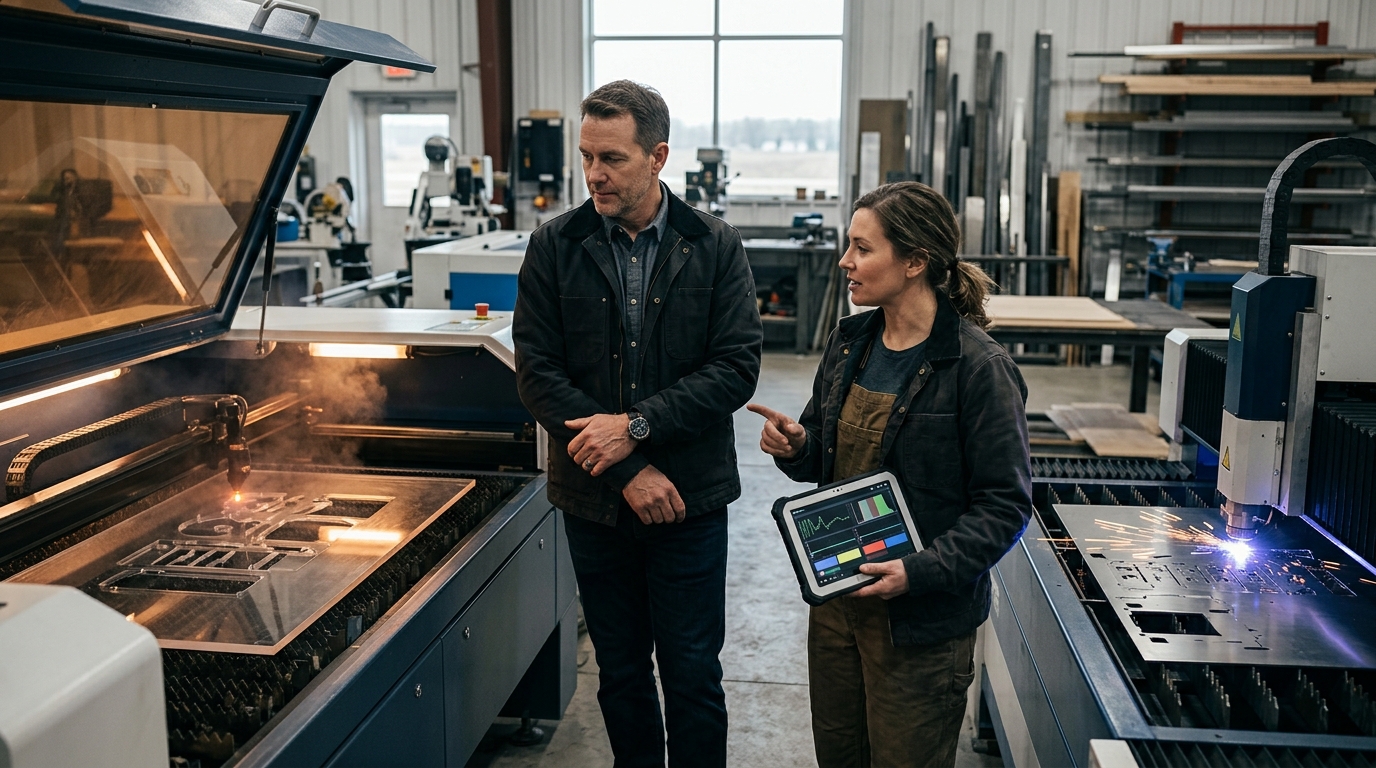
Choosing the correct laser cutting technology is one of the most critical capital expenditure decisions a fabrication shop can make. The global laser cutting market is projected to grow at a compound annual growth rate of over 10% through 2030, driven by demand for precision manufacturing in automotive and aerospace sectors. According to recent industry reports, fiber laser adoption has surpassed CO2 systems in sheet metal processing due to superior energy efficiency and lower operating costs. This shift has created a complex decision matrix for business owners who must balance upfront investment with long-term operational profitability.
Understanding Core Technology Differences
To make an informed decision, you must first understand the fundamental physics driving each machine type. Fiber laser cutting is a process that uses a high-power fiber laser beam to melt, burn, or vaporize material. The beam is generated by doping the core of an optical fiber with rare-earth elements like erbium or ytterbium. This method allows for direct delivery of the beam through the fiber optic cable to the cutting head with minimal loss.
In contrast, CO2 laser cutting is a process that utilizes a gas mixture of carbon dioxide, nitrogen, and helium to generate a laser beam. The beam is produced in a glass or quartz tube and must be directed to the workpiece using a series of mirrors. This optical path introduces potential points of failure and requires more frequent alignment maintenance compared to the solid-state nature of fiber lasers.
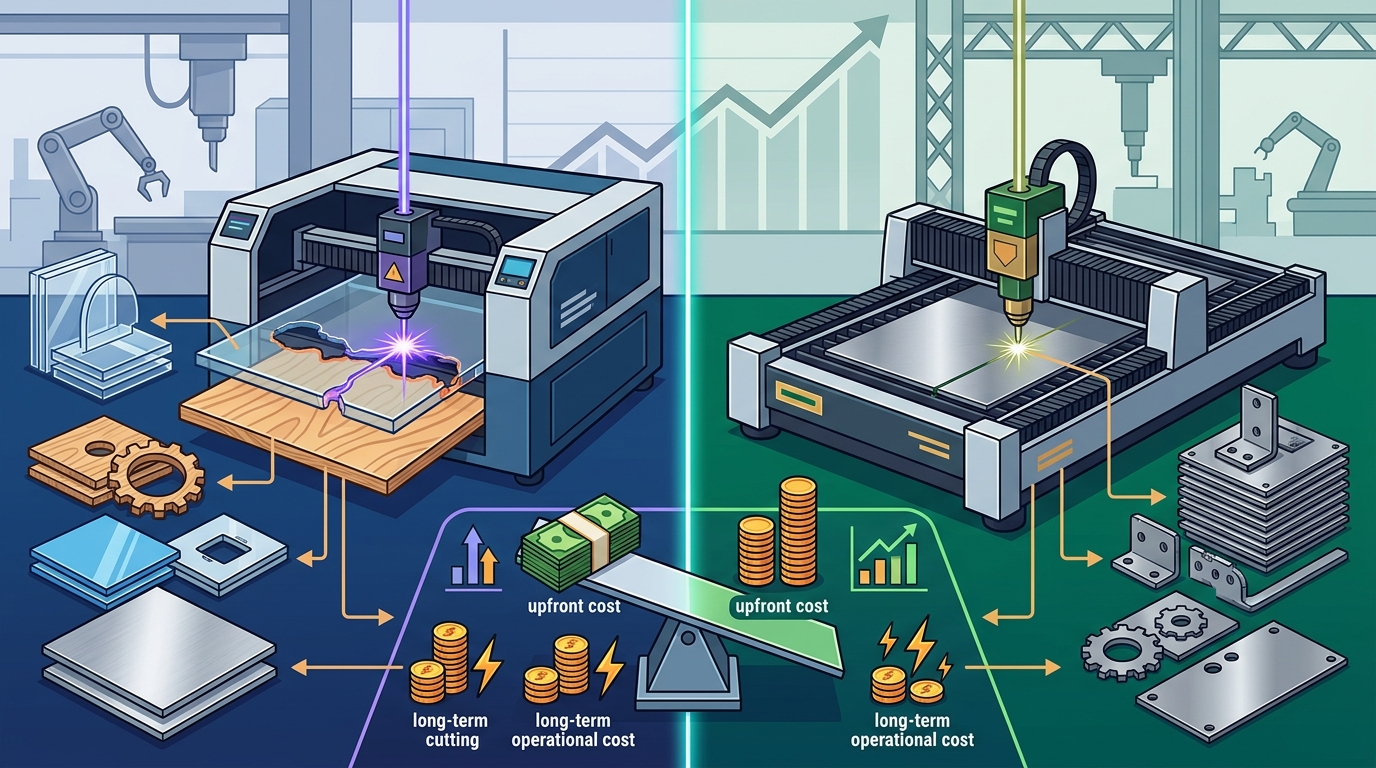
The choice between these two technologies often hinges on your specific application requirements. Fiber lasers excel in cutting reflective metals like copper and brass, where CO2 lasers struggle due to beam absorption issues. However, CO2 lasers remain competitive in cutting non-metallic materials and thicker stainless steel applications where the longer wavelength interacts differently with the material surface.
Material Compatibility and Thickness Limits
Material selection is the primary driver for technology choice. Fiber lasers are generally preferred for mild steel, stainless steel, and aluminum. They offer exceptional cutting speeds on thin to medium gauge materials, often outperforming CO2 systems by a factor of two or more. For example, cutting 1mm mild steel with a 2kW fiber laser can be significantly faster than with a comparable CO2 system.
CO2 lasers, however, have distinct advantages in specific niches. They are often the preferred choice for cutting acrylics, woods, and fabrics. The continuous wave nature of CO2 lasers allows for smoother edges on certain plastics without the charring often associated with high-power fiber cutting. Additionally, for very thick stainless steel plates, CO2 lasers can sometimes achieve cleaner cuts with less dross formation, although high-power fiber lasers are rapidly closing this gap.
When evaluating your shop's workflow, consider the mix of materials you process daily. If your primary focus is sheet metal fabrication for industrial machinery or automotive parts, a fiber laser is likely the superior investment. If your business involves signage, display manufacturing, or custom architectural elements using mixed media, a CO2 system might offer greater versatility.
Operational Costs and Energy Efficiency
One of the most compelling arguments for fiber laser technology is its operational efficiency. Fiber lasers convert electrical power into laser light with an efficiency of up to 40%, whereas CO2 lasers typically operate at around 10% efficiency. This means that for the same cutting power, a fiber laser consumes significantly less electricity. According to energy consumption studies, fiber lasers can reduce power costs by up to 70% compared to CO2 systems over their lifetime.
Maintenance costs also favor fiber lasers. CO2 lasers require regular replacement of gas mixtures, mirrors, and lenses. The gas tubes have a finite lifespan and must be replaced every few years, adding to the total cost of ownership. Fiber lasers, being solid-state devices, have no gas tubes to replace and fewer optical components to align. This results in lower downtime and reduced maintenance labor costs.
When calculating the return on investment (ROI), consider the total cost of ownership (TCO) rather than just the purchase price. While fiber lasers often have a higher upfront cost, the savings in energy and maintenance can offset this difference within a few years. For high-volume production environments, the speed advantage of fiber lasers further accelerates ROI by increasing throughput.
Speed, Precision, and Maintenance
Speed is a critical factor in modern fabrication. Fiber lasers offer faster cutting speeds on thin and medium gauge materials, allowing shops to complete jobs more quickly and take on more work. This increased productivity can lead to higher revenue and better customer satisfaction due to shorter lead times. For instance, cutting 3mm mild steel with a 3kW fiber laser can be up to three times faster than with a 4kW CO2 laser.
Precision is another key consideration. Fiber lasers produce a smaller focal spot size, resulting in narrower kerf widths and finer detail capabilities. This is particularly important for intricate designs and tight tolerances. The beam quality of fiber lasers is generally superior, leading to smoother cut surfaces and less post-processing required.
Maintenance requirements differ significantly between the two technologies. CO2 lasers require regular cleaning and alignment of mirrors, as well as replacement of gas tubes. Fiber lasers require minimal maintenance, primarily involving the cleaning of lenses and nozzles. This reduced maintenance burden allows for more consistent production schedules and less unexpected downtime.
Kern Laser Solutions for Your Business
At Kern Laser, we understand that every business has unique needs. Our range of laser cutting machines is designed to meet diverse fabrication requirements, from small job shops to large-scale industrial operations. We offer both fiber and CO2 laser options, ensuring that you can find the perfect solution for your specific applications.
Our fiber laser cutting machines are engineered for maximum efficiency and precision. They feature advanced control systems that optimize cutting parameters for different materials and thicknesses. This ensures consistent, high-quality cuts every time. Explore our fiber laser cutting machines to see how they can enhance your production capabilities.
For businesses that require versatility in cutting non-metallic materials, our CO2 laser systems provide reliable performance and excellent edge quality. These machines are ideal for signage, display, and architectural applications. Learn more about our CO2 laser cutting machines and discover how they can support your creative projects.
We also offer comprehensive support services, including installation, training, and maintenance. Our team of experts is dedicated to helping you get the most out of your laser cutting investment. Visit our services page to learn about the support options available to you.
Additionally, we provide detailed industry insights and technical articles to help you stay informed about the latest trends and technologies in laser cutting. Our contact page is the best place to start a conversation about your specific needs.
Key Takeaways
- Fiber lasers offer superior energy efficiency, consuming up to 70% less power than CO2 systems.
- CO2 lasers are better suited for cutting non-metallic materials like acrylic and wood.
- Fiber lasers provide faster cutting speeds on thin to medium gauge metals.
- Maintenance costs are significantly lower for fiber lasers due to fewer replaceable components.
- Kern Laser offers both fiber and CO2 options to meet diverse business needs.
- The global laser cutting market is growing rapidly, driven by demand for precision manufacturing.
- Total cost of ownership should be considered, not just the initial purchase price.
Frequently Asked Questions
Which laser is better for cutting stainless steel?
Fiber lasers are generally preferred for cutting stainless steel due to their higher efficiency and speed. They produce cleaner cuts with less dross, reducing the need for post-processing.
Can CO2 lasers cut metals?
Yes, CO2 lasers can cut metals, particularly mild steel and stainless steel. However, they are less efficient than fiber lasers and may struggle with reflective metals like copper and brass.
What is the lifespan of a CO2 laser tube?
The lifespan of a CO2 laser tube varies depending on usage and maintenance, but it typically lasts between 10,000 and 20,000 hours. Regular maintenance can extend this lifespan.
How does the cutting speed of fiber lasers compare to CO2?
Fiber lasers are significantly faster than CO2 lasers on thin to medium gauge materials. For example, cutting 1mm mild steel can be up to three times faster with a fiber laser.
Do I need special training to operate a fiber laser?
While fiber lasers are user-friendly, proper training is essential for safe and efficient operation. Kern Laser provides comprehensive training programs for all our customers.
What materials are best cut with a CO2 laser?
CO2 lasers are ideal for cutting non-metallic materials such as acrylic, wood, fabric, and leather. They also perform well on certain plastics and composites.
How much does a fiber laser cutting machine cost?
The cost of a fiber laser cutting machine varies based on power, size, and features. Kern Laser offers competitive pricing and financing options to suit different budgets.
Ready to Upgrade Your Fabrication Shop?
Choosing the right laser cutting machine is a significant decision that impacts your productivity, quality, and bottom line. Whether you need the speed and efficiency of a fiber laser or the versatility of a CO2 system, Kern Laser has the solution for you. Contact our team today to discuss your specific requirements and receive a personalized quote. Visit https://kernlasers.com/contact to get started.